
Bariatric and Metabolic Surgery
Specialized care for obesity and its health consequences.
Bariatric and metabolic surgery includes several procedures for the treatment of obesity. It acts on weight, but also on satiety and certain mechanisms involved in metabolic regulation.
It is part of a multidisciplinary care pathway that includes a pre-operative evaluation and long-term follow-up.
What is bariatric and metabolic surgery?
Bariatric surgery, also called weight-loss surgery, includes different procedures for the treatment of obesity when the medical situation justifies a surgical approach.
The term metabolic surgery highlights that the effects of these procedures are not limited to weight. Changes to the digestive system can also influence hunger, satiety, and various mechanisms involved in metabolic regulation.
Depending on the procedure chosen, surgery can change the volume of the stomach, the path food takes through the digestive system, or combine several mechanisms.
The goal is not to offer the same procedure to every patient, but to determine a strategy tailored to each situation. SMOB

Weight

Satiety

Metabolism
Who can be offered bariatric surgery?
An indication based on a comprehensive evaluation
The decision to proceed with bariatric surgery is not based on weight or BMI alone.
The indication is assessed as part of specialized care. It takes into account, in particular, weight history, treatments already tried, associated conditions, eating habits, medical and surgical history, and the ability to commit to long-term follow-up.
Being eligible for bariatric surgery does not mean that a particular procedure is automatically indicated. The choice of strategy is individualized.
The indication is individualized.
BMI and weight history
Weight evolution and previous therapeutic attempts.

Associated conditions
Diabetes, high blood pressure, sleep apnea, and other consequences of obesity.

Eating behavior
Eating habits and relationship with food. Eating disorders

General health status
Medical history, treatments, and overall medical situation.

Individual situation
Expectations, goals, and understanding of the different options.

Long-term follow-up
Ability to commit to ongoing medical and nutritional follow-up.

What benefits can be expected?
Weight
Metabolism
Mobility
Health
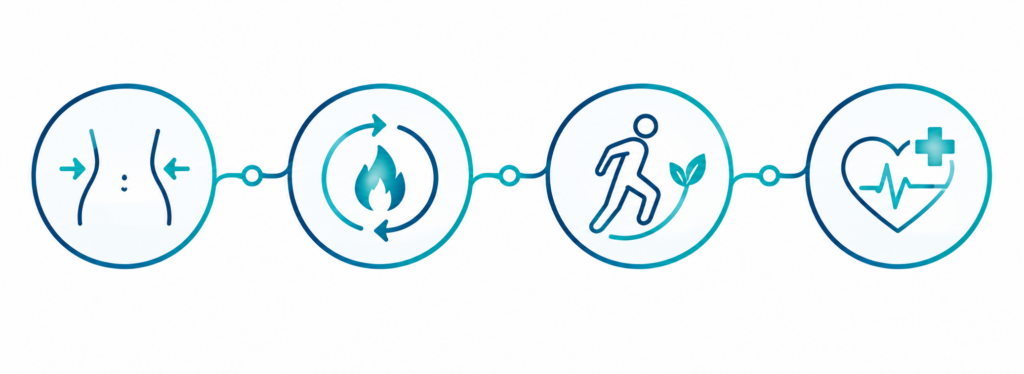
Effects on weight and metabolic health
Sleeve gastrectomy can achieve significant, lasting weight loss. It can also help improve several conditions associated with obesity, particularly certain metabolic disorders such as type 2 diabetes.
Every journey is different
The outcome cannot be predicted precisely for any given person. It depends on many individual factors and long-term evolution.
Partial weight regain can also occur after bariatric surgery. When it becomes significant, it deserves evaluation to identify the causes and discuss the different care options.
How does the pathway work?
Surgery is one step in a care pathway that begins before the operation and continues over the long term.

Evaluation
Medical and nutritional work-up, screening for associated conditions, and assessment of the individual situation.
Preparation
Information about the procedure, nutritional preparation, and organization of postoperative follow-up.
Procedure
The procedure is performed under general anesthesia, laparoscopically whenever conditions allow.
Recovery
Postoperative monitoring and gradual resumption of eating according to the team’s protocol.
Follow-up
Regular long-term medical, nutritional, and biological check-ups, including with your primary care physician.
Sleeve, bypass, or gastric band?
There is no single bariatric procedure suited to every patient.
The choice depends on many factors: weight history, eating habits, metabolic conditions, gastroesophageal reflux, medical or surgical history, current treatments, and patient preferences.
The different techniques have specific mechanisms, benefits, constraints, and risks.
The choice is not based on finding the procedure that is “most effective” in absolute terms, but the one that best fits the patient’s situation.

What are the risks?
Like any surgical procedure, bariatric surgery carries early and late risks.
Some are common to abdominal surgery in general, while others are specific to the procedure performed. Digestive or nutritional complications, or complications related to the anatomical changes, can occur, and some situations may require a further operation.
Long-term monitoring also allows for detection of any deficiencies and adjustment of supplementation when needed.
The expected benefits, risks, and alternatives are discussed individually before any decision to operate.
Long-term follow-up
Surgery is one step. Follow-up is part of the treatment.
After an operation, follow-up helps track the evolution of weight and eating habits, adjust supplementation, monitor certain biological parameters, and detect any complications early.
Taking vitamins and minerals, along with regular blood tests, are part of care after bypass surgery.
Medical Follow-up
Blood Tests
Vitamin Supplementation
Dietary Follow-up
Psychological Follow-up
Physical Activity Follow-up
Personalized care
The decision to undergo bariatric surgery requires taking into account the patient’s medical situation, history, and expectations.
The consultation allows the indication to be assessed, the different treatment options to be explained, and the benefits, constraints, and risks specific to each procedure to be discussed.
Frequently asked questions:
Bariatric surgery refers to the procedures used in the surgical treatment of obesity. The term metabolic surgery also highlights their effects on various metabolic mechanisms and certain associated conditions, particularly type 2 diabetes.
The choice depends on the individual situation. Reflux, metabolic conditions, eating habits, medical history, current treatments, and other factors can all play a role in the decision.
There is no single ideal procedure for every patient. The different techniques have different mechanisms, benefits, constraints, and risks. The choice is made after a personalized evaluation.
Yes. Partial weight regain can occur in the long term. When it becomes significant, it deserves evaluation to identify the causes and discuss care options.
Certain procedures can significantly improve glycemic control and type 2 diabetes. The effect varies depending on the procedure and the individual situation.
Nutritional and biological monitoring is necessary. Supplementation needs depend in particular on the procedure performed and the results of biological follow-up.
Yes. Long-term follow-up is an integral part of care after bariatric surgery. It allows, in particular, monitoring of weight evolution, nutritional and metabolic status, and screening for any complications.
Considering obesity surgery?
Every situation is different. The consultation allows your history, health status, and expectations to be assessed, and the different treatment options to be discussed.
The goal is to determine, together with you, the strategy best suited to your situation.