
BARIATRIC AND METABOLIC SURGERY
Sleeve Gastrectomy
A reference procedure in the surgical treatment of obesity.
Sleeve gastrectomy reduces the volume of the stomach while preserving the natural intestinal tract. It acts on food quantities, satiety, and certain mechanisms involved in appetite regulation.
The choice of this procedure is based on a personalized evaluation and is part of multidisciplinary care with long-term follow-up.
What is a sleeve gastrectomy?
Sleeve gastrectomy, also called longitudinal gastrectomy, is a bariatric surgery procedure that changes the shape and volume of the stomach.
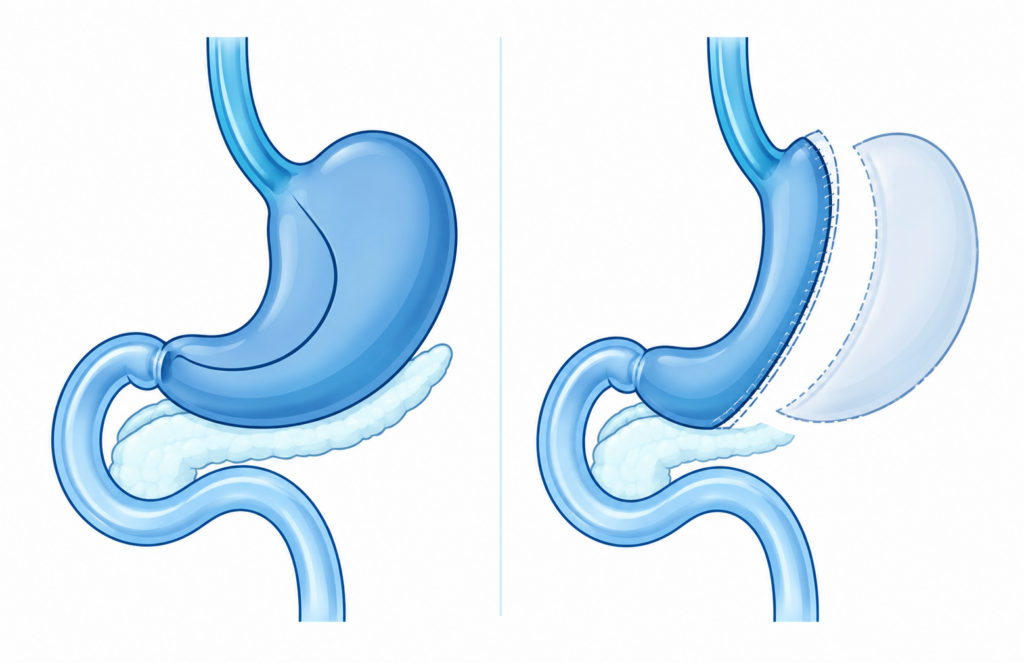
A large portion of the stomach is removed longitudinally, mainly along its greater curvature. The remaining stomach then takes the shape of a narrow tube.
Unlike gastric bypass, the intestinal tract is not bypassed. Food continues its path from the esophagus to the stomach, then passes through the pylorus, duodenum, and small intestine.
The resected part of the stomach is removed from the body. Sleeve gastrectomy is therefore a non-reversible anatomical change
Normal digestive anatomy
After Sleeve Gastrectomy
How does the sleeve work?

Reduced food quantities
The reduced stomach volume limits the amount of food that can be consumed during a meal.

An effect on hunger and satiety
The change to the stomach also affects certain digestive and hormonal signals involved in hunger, satiety, and metabolic regulation.

A preserved digestive tract
Unlike the bypass, the sleeve does not bypass the intestine. Food continues to pass through the pylorus and duodenum before continuing its path through the small intestine.
The sleeve thus combines a reduction in gastric volume with changes to the mechanisms involved in hunger and satiety.
Who can be offered a sleeve?
An individualized medical decision
Bariatric surgery is not decided on the basis of weight alone.
In Switzerland, this is part of specialized care that meets the criteria defined by the Swiss Multidisciplinary Obesity Society (SMOB). Sleeve gastrectomy is one of the established primary bariatric procedures.
In adults, the indication for bariatric surgery is based on a comprehensive evaluation that takes into account, in particular, BMI, weight history, treatments already tried, associated conditions, and the ability to commit to long-term follow-up.
But being eligible for bariatric surgery does not necessarily mean that the sleeve is the most suitable procedure. The indication is individualized.
How does the pathway work?
The sleeve is one step in a care pathway
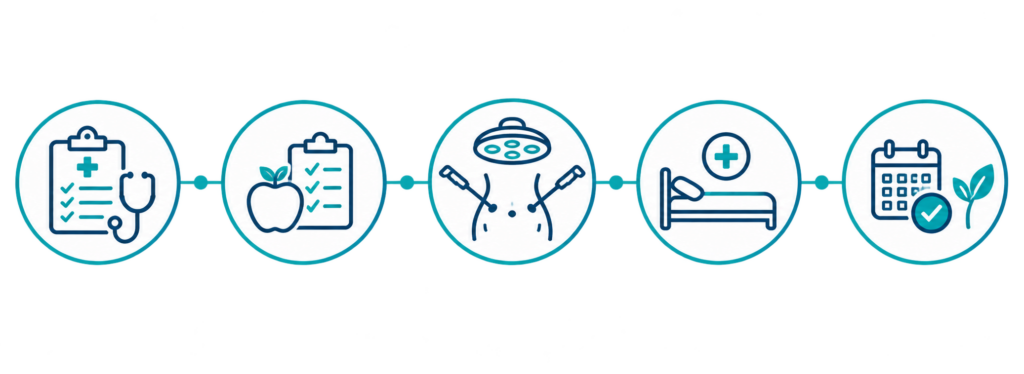
Evaluation
Medical and nutritional work-up, screening for associated conditions, and assessment of the individual situation.
Preparation
Information about the procedure, nutritional preparation, and organization of postoperative follow-up.
Procedure
Sleeve gastrectomy is performed under general anesthesia, most often laparoscopically.
Recovery
Postoperative monitoring and gradual resumption of eating according to the team’s protocol.
Follow-up
Regular long-term medical, nutritional, and biological check-ups, including with your primary care physician.
What benefits can be expected?
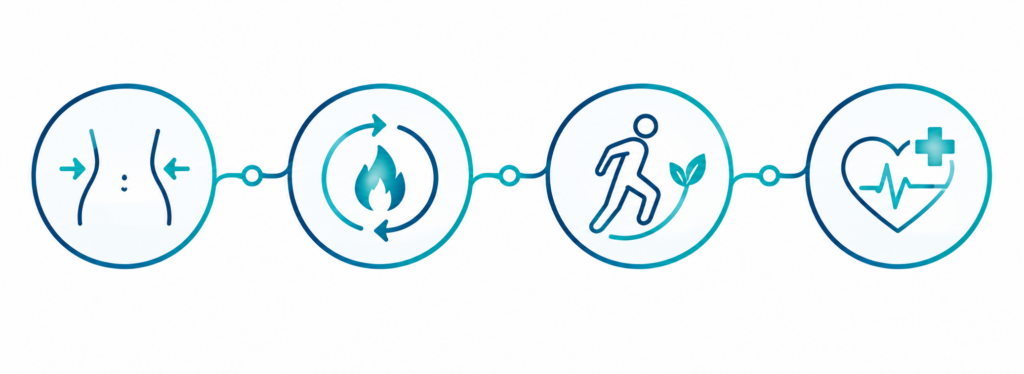
Weight
Metabolism
Mobility
Health
Effects on weight and metabolic health
Sleeve gastrectomy can achieve significant, lasting weight loss. It can also help improve several conditions associated with obesity, particularly certain metabolic disorders such as type 2 diabetes.
Every journey is different
The outcome cannot be predicted precisely for any given person. It depends on many individual factors and long-term evolution.
Partial weight regain can also occur after bariatric surgery. When it becomes significant, it deserves evaluation to identify the causes and discuss the different care options.

What are the risks of sleeve gastrectomy?
Like any surgical procedure, sleeve gastrectomy carries early and late risks.
A digestive leak can occur at the gastric staple line and require prompt management.
Postoperative bleeding may require monitoring or, more rarely, an additional procedure.
Narrowing or deformation of the tubular stomach can cause difficulty eating, nausea, or vomiting and require evaluation.
The sleeve can promote the onset of gastroesophageal reflux or worsen pre-existing reflux. The presence of reflux is therefore one of the factors considered when choosing the procedure.
Weight regain can occur some time after the procedure. When it becomes significant, it warrants re-evaluation to understand the causes and consider the different care options.
Vitamin or mineral deficiencies can occur after bariatric surgery. Nutritional follow-up, blood tests, and appropriate supplementation are part of long-term care.
This list is not exhaustive. Individual benefits and risks are discussed during the consultation and the preoperative work-up.
Long-term follow-up
After a sleeve gastrectomy, follow-up helps track the evolution of weight and eating habits, monitor digestive tolerance, adjust supplementation, and detect any complications early.
Long-term care combines, in particular, medical and nutritional follow-up, physical activity, support tailored to the patient’s situation, and regular blood tests. SMOB places bariatric surgery within long-term multidisciplinary care.
Medical Follow-up
Blood Tests
Vitamins and Minerals
Dietary Follow-up
Psychological Follow-up
Physical Activity Follow-up
BYPASS OR SLEEVE?
There is no single ideal bariatric procedure for every patient.
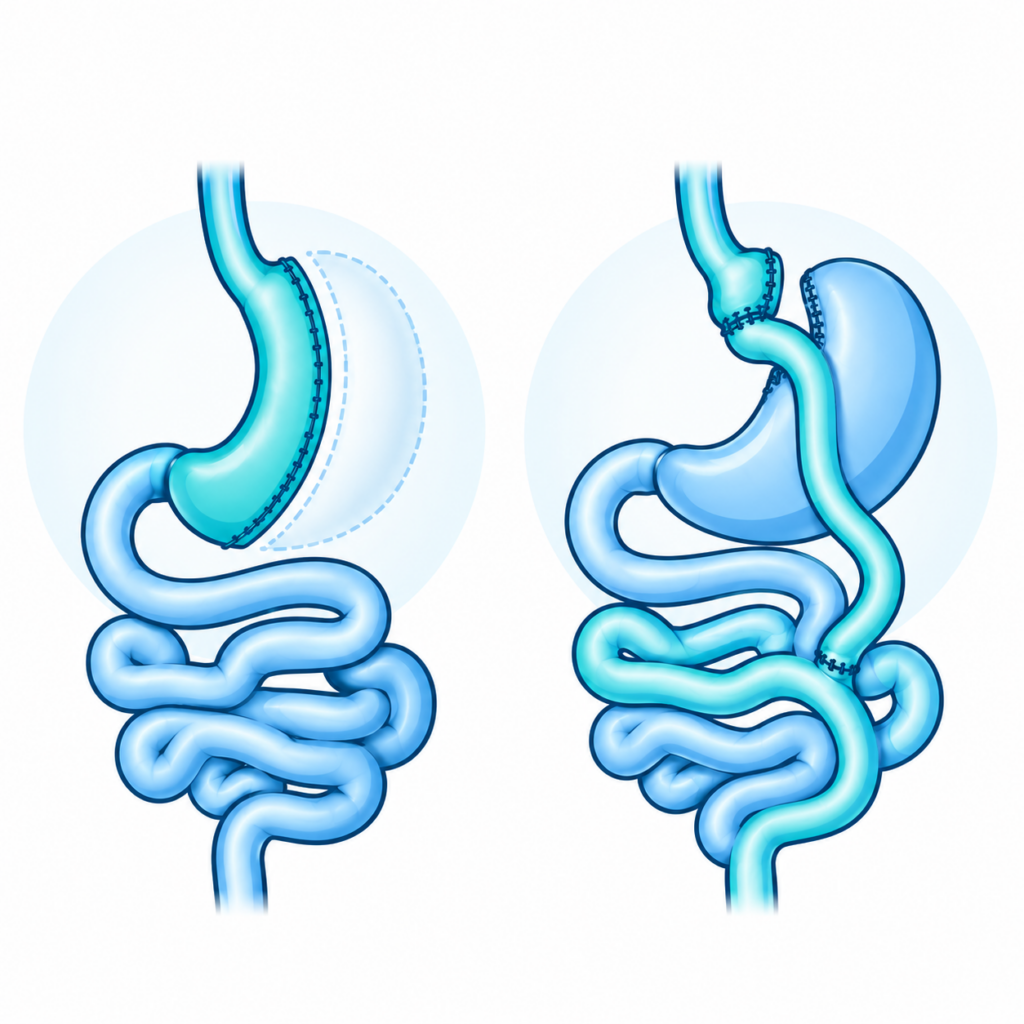
During a sleeve, a large portion of the stomach is removed to create a tubular stomach. The intestinal tract is not bypassed.
During a bypass, a small gastric pouch is created and connected to the small intestine. Most of the stomach remains in place but is no longer used by food.
These differences have consequences in particular on the mechanisms of action, gastroesophageal reflux, the risk of certain deficiencies, and the specific complications of each procedure.
The choice between gastric bypass, sleeve gastrectomy, and other treatment strategies is based on an individual evaluation.
Several factors can play a role in this decision:
- BMI and weight history;
- eating habits and behavior;
- the presence of diabetes or other metabolic conditions;
- the presence of gastroesophageal reflux or a hiatal hernia;
- medical and surgical history;
- current medications;
- the patient’s expectations and preferences.
The decision is made after a complete work-up and discussion with the patient as part of multidisciplinary care.
It is not about choosing the “most effective” operation in absolute terms, but the one best suited to the patient’s situation.
Frequently asked questions:
Weight loss varies from person to person. It depends in particular on initial weight, changes in eating habits, physical activity, metabolic factors, and the quality of follow-up. A personalized estimate can be discussed during the consultation.
Yes. Partial weight regain can occur some time after the procedure. When it becomes significant, an evaluation allows the causes to be identified and the different care options to be discussed.
The sleeve involves removing a large portion of the stomach along its greater curvature. The remaining stomach forms a narrow tube, while the pylorus and continuity with the duodenum are preserved.
The remaining stomach can change over time and its capacity can increase. However, this anatomical change alone does not explain any weight regain, which is generally multifactorial.
Nutritional and biological follow-up is necessary after bariatric surgery. Vitamin and mineral needs are assessed during follow-up, and supplementation is tailored to the individual situation.
Yes. Gastroesophageal reflux can appear or worsen after a sleeve in some patients. The presence of reflux before the procedure is therefore taken into account when choosing the surgical technique.
Not in the anatomical sense: the resected part of the stomach is removed from the body. The sleeve is therefore considered a non-reversible procedure.
The length of leave depends in particular on the type of occupation, postoperative progress, and individual recovery. It is determined with the medical team based on each situation.
Considering obesity surgery?
Every situation is different. The consultation allows your history, health status, and expectations to be assessed, and the different treatment options to be discussed.
The goal is to determine, together with you, the strategy best suited to your situation.