
COLORECTAL SURGERY
Diverticulitis
When a colon diverticulum becomes inflamed
Diverticula are small pouches that form in the wall of the colon.
Their presence is called diverticulosis and often causes no symptoms.
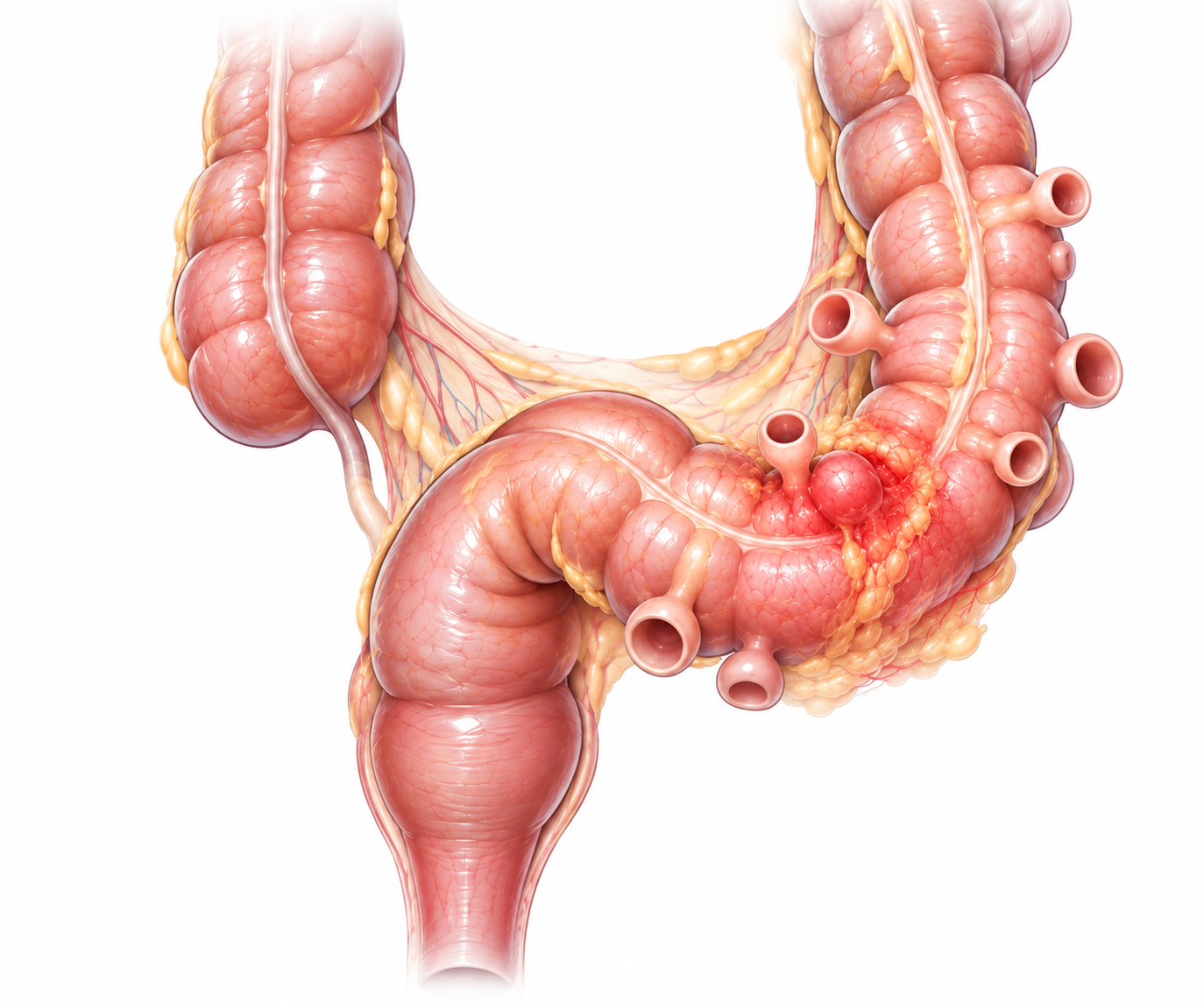
Diverticulitis occurs when one or more of these diverticula become inflamed.
Most episodes can be managed without surgery. Certain complicated forms or specific situations may, however, require surgical treatment.
What is a diverticulum ?
A small pouch in the wall of the colon
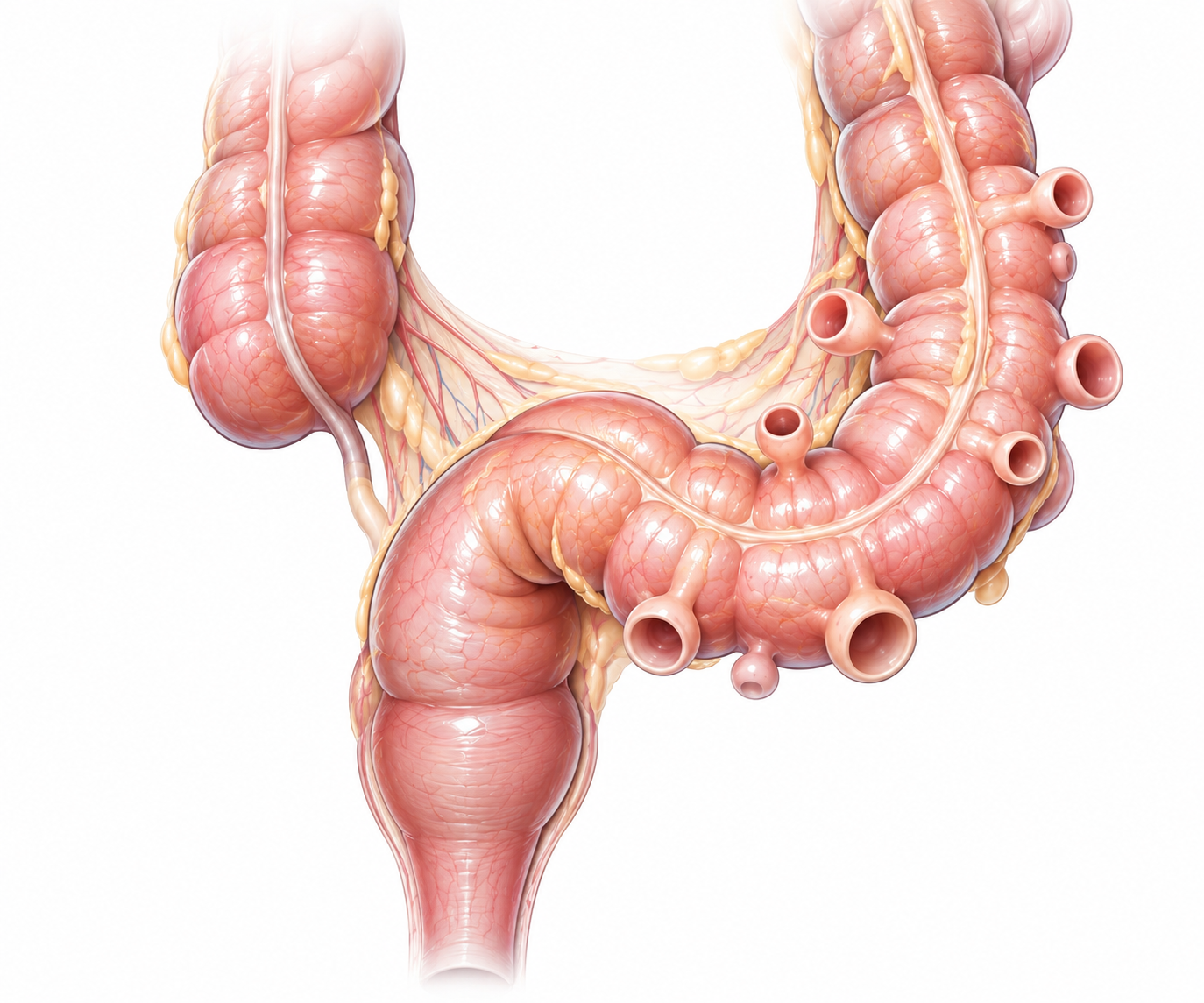
A diverticulum is a small pouch that forms outward through certain areas of the colon wall.
When several diverticula are present, this is called colonic diverticulosis.
Diverticula are particularly common in the sigmoid colon, located in the lower left part of the abdomen.
The presence of diverticula does not mean that diverticulitis is present.
Diverticulosis and diverticulitis are therefore not synonymous: diverticulosis refers to the presence of diverticula, while diverticulitis refers to their inflammation.
What is the difference between diverticulosis and diverticulitis ?
From the presence of diverticula to inflammation
Diverticulosis can remain silent and never cause diverticulitis.
When a diverticulum becomes inflamed, a reaction develops in its wall and in the tissues surrounding the colon.
This is referred to as acute diverticulitis.
The extent of this inflammation varies : it may remain localized around the colon or be accompanied by complications.
What are the symptoms of diverticulitis ?
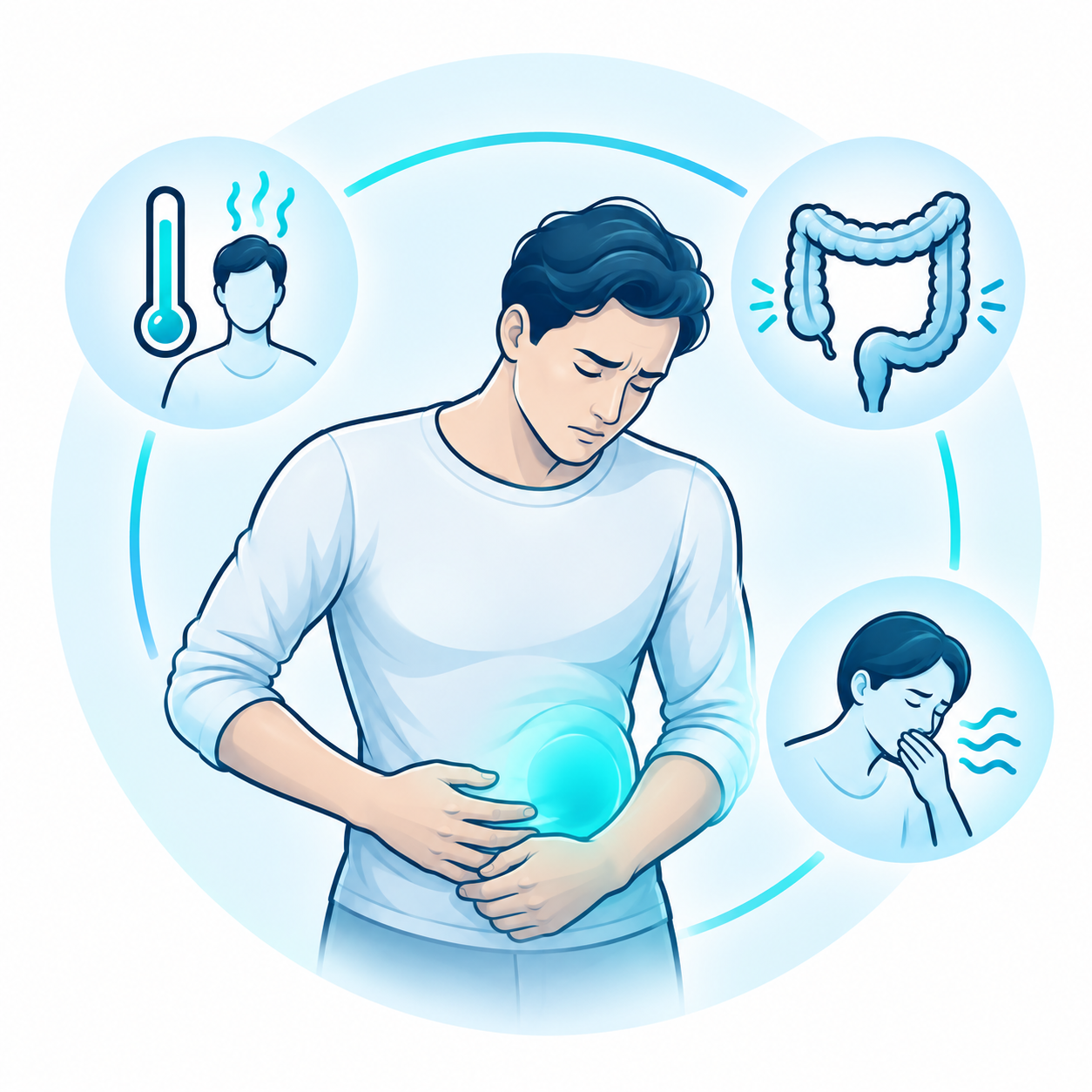
Abdominal pain often located on the left side
The presentation can vary from one patient to another.
Diverticulitis frequently presents as pain in the lower left part of the abdomen. This pain may be accompanied in particular by :
- fever
- abdominal tenderness
- changes in bowel habits with constipation or diarrhea
- nausea or decreased appetite
The intensity of symptoms is not the same in every patient.
Abdominal pain alone is not enough to diagnose diverticulitis : other conditions can cause similar symptoms.
How is diverticulitis diagnosed ?
Clinical examination and CT scan help clarify the diagnosis
The diagnosis begins with the history of symptoms and clinical examination.
A blood test may be performed to look for biological signs of inflammation, among other things.
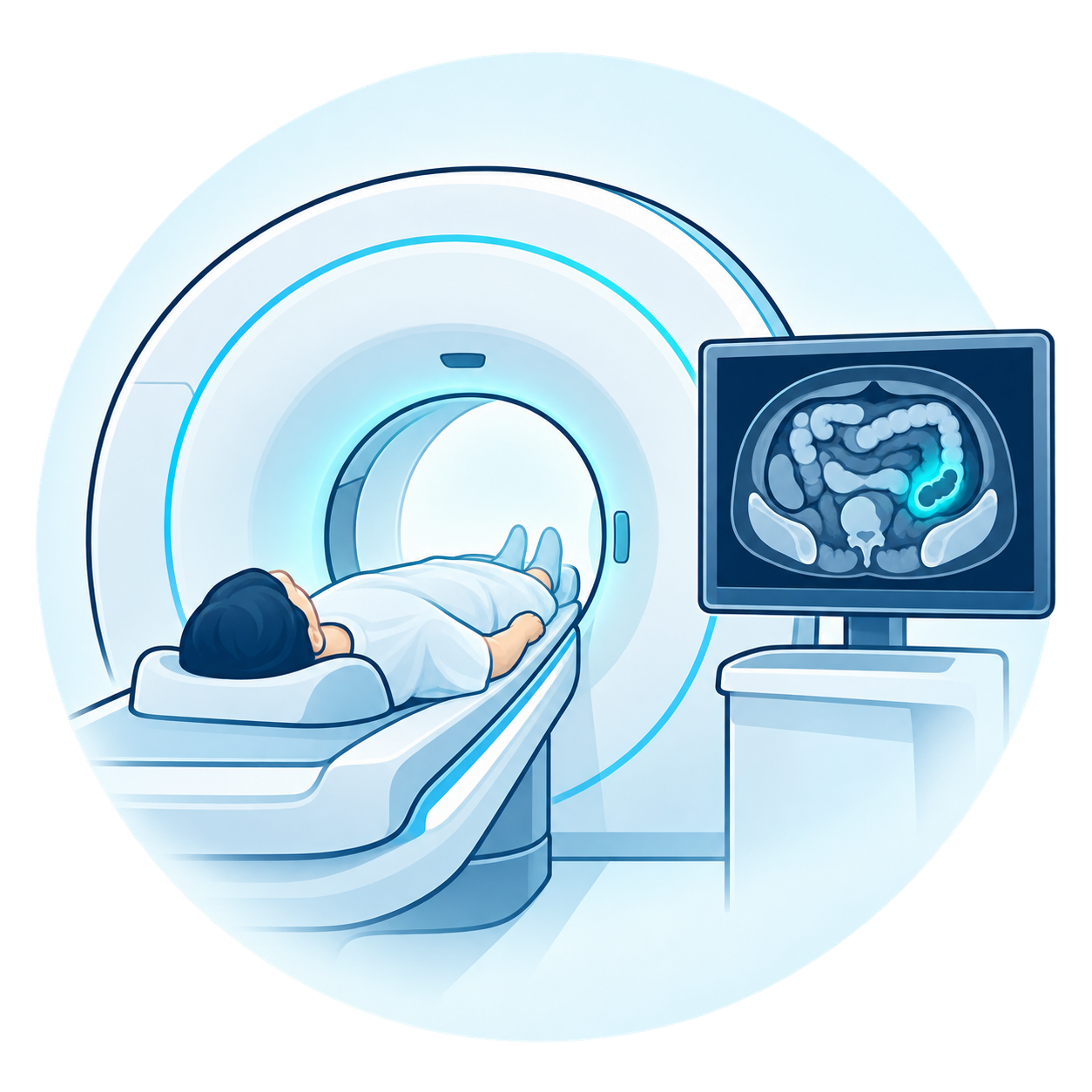
When imaging is needed, the abdominal and pelvic CT scan plays an important role.
It allows visualization of the affected colon segment and assessment of the extent of inflammation.
It also helps look for certain complications such as an abscess or perforation.
The CT scan therefore does not only confirm the diagnosis : it also helps distinguish uncomplicated diverticulitis from a complicated form.
What is complicated diverticulitis ?
Certain forms can lead to complications
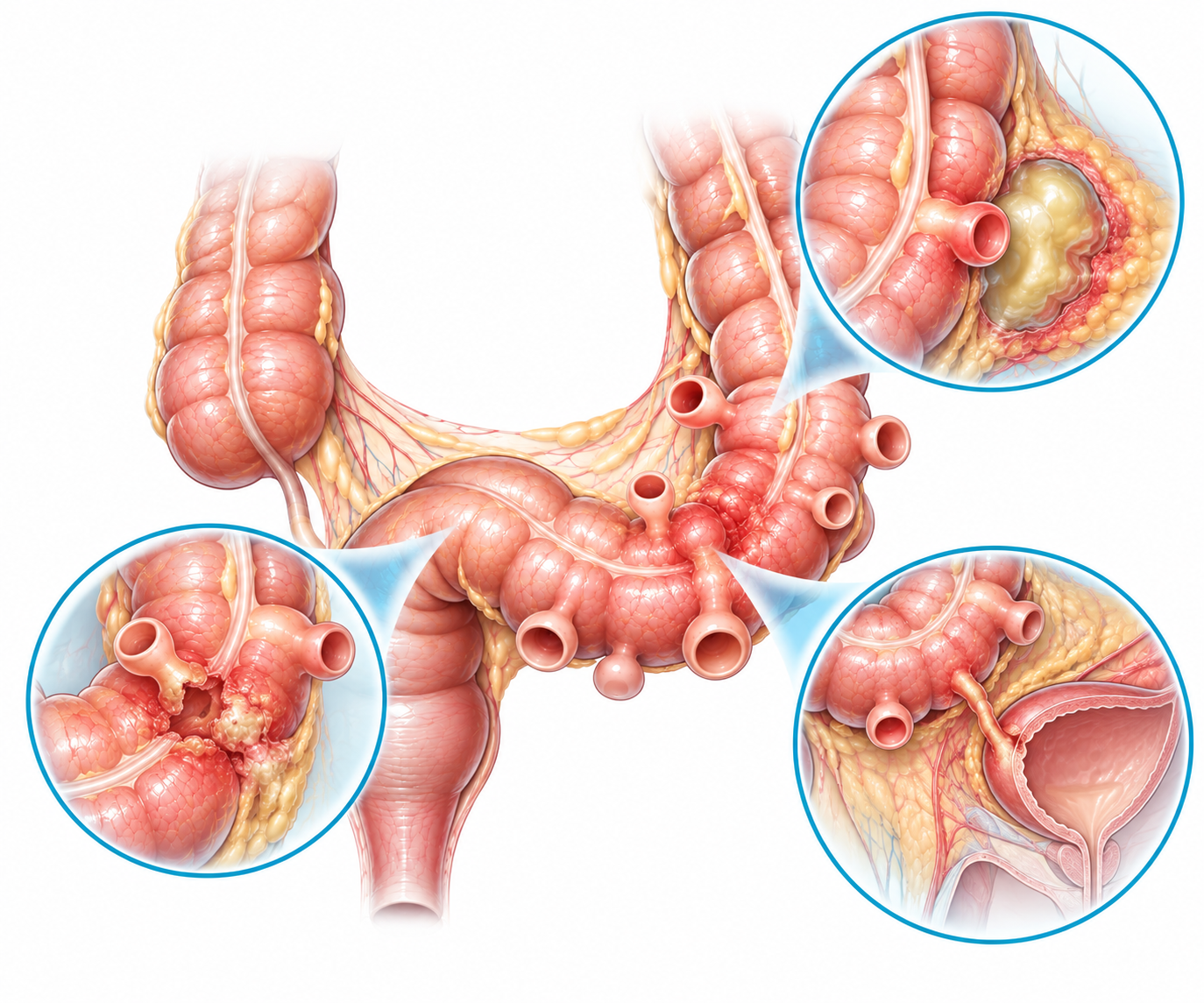
Diverticulitis is described as complicated when it is accompanied by certain consequences of the inflammation. These notably include :
Abscess
An infected collection can form near the colon.
Perforation and peritonitis
A perforation can allow air or digestive contents to pass outside the colon. In the most severe forms, peritonitis can develop.
Fistula
An abnormal connection can form between the colon and a neighboring organ, particularly the bladder.
Stricture
Inflammatory episodes can lead to a narrowing of the colon that may hinder the passage of intestinal contents.
Not all cases of diverticulitis present these complications. Identifying them is important because it can change the treatment strategy.
How is acute diverticulitis treated ?
Treatment depends on the severity of the episode
Not all cases of diverticulitis require the same treatment.
Mild, uncomplicated diverticulitis can, in some patients, be managed without hospitalization.
Depending on the situation, treatment may combine : temporary dietary adjustment, pain management, monitoring of progress, and antibiotics when indicated.
Antibiotics are today not systematically given to every patient with mild, uncomplicated acute diverticulitis. Their use depends in particular on the clinical presentation, the patient’s overall condition and the severity of the disease.
Complicated diverticulitis or an unfavorable course, however, may require hospitalization and more intensive care.
Treatment must be tailored to the clinical situation : there is no single treatment identical for every case of diverticulitis.
When diverticulitis is accompanied by an abscess, treatment depends in particular on its size, location and the patient’s clinical condition. Some abscesses can be treated medically. In other situations, image-guided percutaneous drainage may be offered to evacuate the collection without immediately performing abdominal surgery. Surgery may be necessary when drainage is not possible, does not control the infection, or when the clinical situation requires it.

When should diverticulitis be operated on ?
The decision does not simply depend on the number of episodes
This is an essential point.
Surgery is not automatically indicated after a predefined number of diverticulitis episodes. The decision is individualized. Surgery may notably be discussed in certain situations :
- complications such as a fistula or a stricture
- certain complicated forms
- failure of non-surgical treatment
- recurrent episodes with a significant impact on quality of life
- persistent symptoms in certain situations
- a specific context related to the patient or the disease
The severity of previous episodes, their frequency, symptoms between episodes, overall health and the patient’s expectations all contribute to the decision.
The goal is not to operate on a number of episodes, but to determine whether surgery provides a meaningful benefit in the patient’s individual situation.
What operation is performed ?
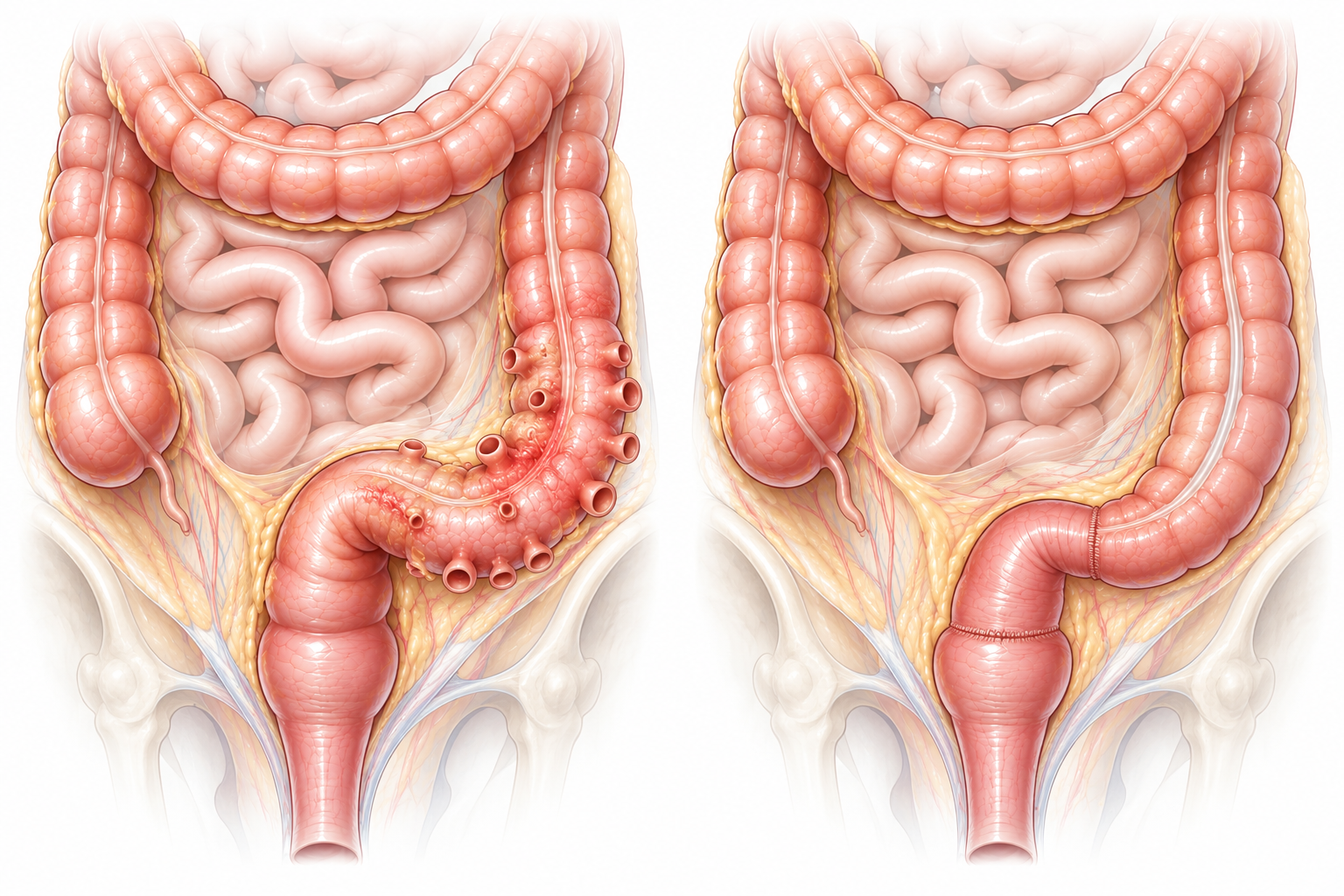
Sigmoidectomy removes the diseased part of the colon
When diverticulitis affects the sigmoid colon, surgery generally consists of removing the diseased sigmoid segment.
This procedure is called a sigmoidectomy.
The principle is not to remove each diverticulum individually.
The affected segment is resected and digestive continuity is generally restored by joining the remaining colon to the rectum. This junction is called a colorectal anastomosis.
The goal is to remove the segment responsible for the disease and to perform the anastomosis on suitable tissue.
→ Learn more about colectomy
Laparoscopy or robot-assisted surgery
A minimally invasive approach when the situation allows
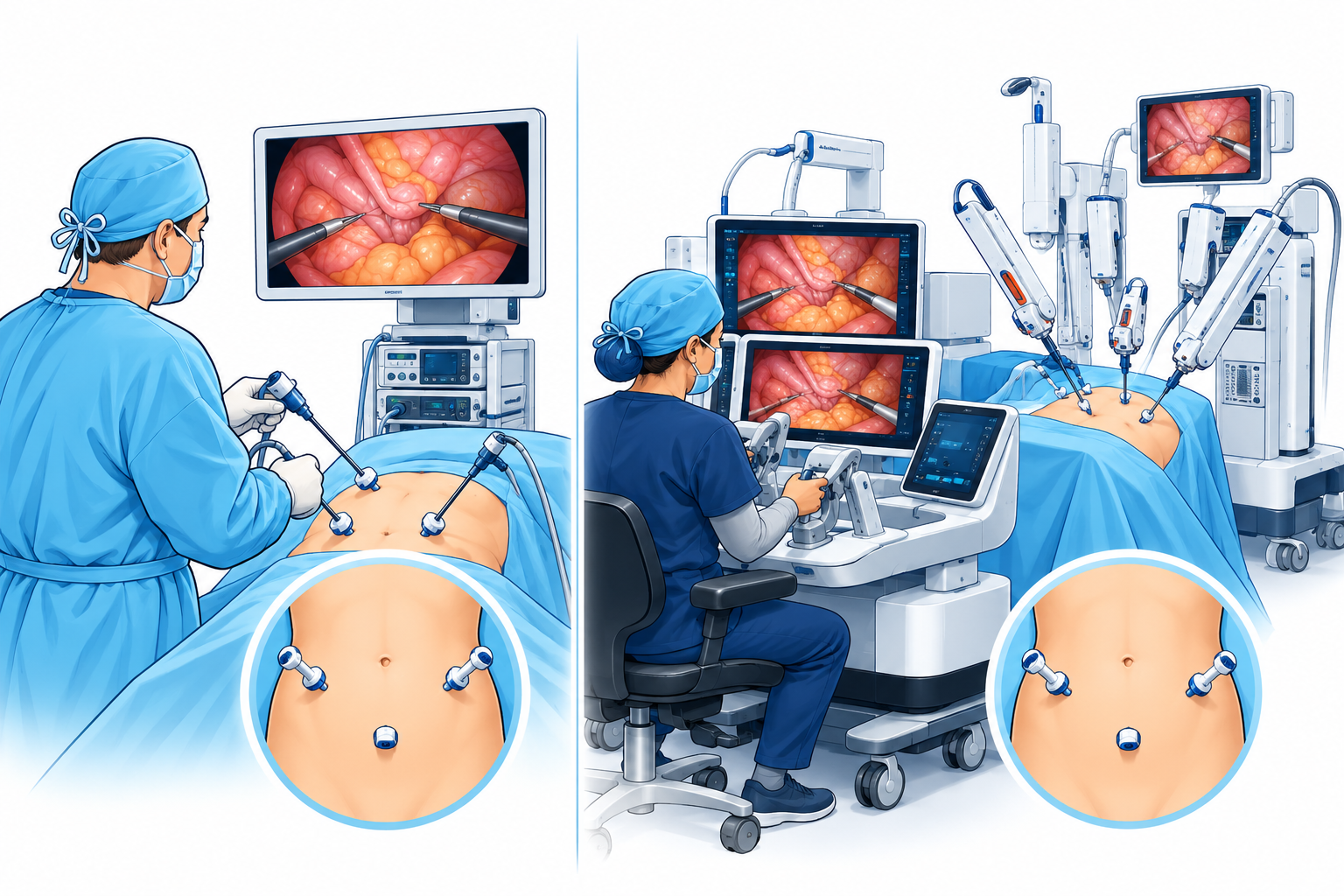
In many elective situations, sigmoid resection can be performed using a minimally invasive approach.
Laparoscopy
Laparoscopy allows surgery to be performed using a camera and instruments inserted through several small abdominal incisions.
Robot-assisted surgery
In certain situations, the procedure can also be performed with robotic assistance. The surgeon personally controls the instruments from the console : the robotic system does not perform the procedure autonomously.
A sigmoidectomy can, in certain situations, be performed by laparoscopy or with robotic assistance.
Is a stoma necessary ?
Not systematically
During a planned procedure carried out under good conditions, digestive continuity can often be restored directly by an anastomosis.
A stoma may nevertheless be necessary in certain situations. This possibility depends in particular on the severity of the disease, the context of the surgery, the condition of the tissues and whether or not conditions allow an anastomosis to be performed safely.
In an emergency situation with significant abdominal infection, the surgical strategy may differ from that of an elective procedure performed away from the acute episode.
Having diverticulitis operated on therefore does not automatically mean having a stoma.
Why operate away from the acute episode when possible ?
When surgery is indicated but there is no surgical emergency, it can be planned after the inflammatory episode has resolved. This notably allows surgery to be performed in a different context than significant acute inflammation. However, certain severe complications may require urgent surgery. The strategy therefore depends on the clinical context.
Should a colonoscopy be performed after diverticulitis ?
A colonoscopy may be recommended after an episode of diverticulitis to examine the colon once the acute episode has resolved. Its necessity depends in particular on the severity of the episode, the patient’s history, and the date and quality of any recent colonoscopy. When indicated after an acute episode, it is generally performed after the inflammation has subsided, not during the acute phase.
The goal is notably to examine the colon under good conditions and to rule out another condition that can sometimes present similar features.
Can the risk of recurrence be reduced ?
Lifestyle plays a role
After the acute episode has resolved, a good-quality diet, rich in plant foods and fiber when well tolerated, is part of preventive measures.
Regular physical activity, maintaining a healthy weight and stopping smoking also contribute to a favorable lifestyle.
Contrary to an old and widespread belief, it is generally not necessary to systematically avoid nuts, seeds or popcorn simply because of diverticulosis.
Dietary advice during an acute flare-up and long-term diet after recovery are two different situations.

After a sigmoidectomy
A gradual recovery
After surgery, early mobilization is generally encouraged.
Eating is resumed gradually depending on the situation and digestive recovery.
The length of hospital stay depends on how the surgery went and the postoperative course.
Walking and daily activities are resumed gradually.
Returning to work, driving, sport and lifting depends on the surgery performed and individual recovery.
Personalized instructions are given after surgery to tailor the resumption of activities to each situation.

Personalized care
Understanding the disease before deciding on possible surgery
Most patients with diverticulitis do not automatically require surgery.
When surgery is being considered, the decision is based on the history of the disease, previous episodes, possible complications, tests performed, persistent symptoms and the patient’s overall situation.
The consultation helps determine whether monitoring, medical management or surgery is the most appropriate strategy.
Dr Pierre Fournier
General and Visceral Surgery
[Photo réelle du Dr Fournier — à insérer une fois disponible]
Frequently Asked Questions
Diverticulosis refers to the presence of diverticula on the wall of the colon. Diverticulitis refers to the inflammation of one or more of these diverticula.
Sigmoid diverticulitis frequently causes pain in the lower left part of the abdomen.
It depends on the clinical situation. It is particularly useful for confirming a diagnosis not yet documented by imaging, assessing a severe presentation, or looking for a complication.
No. In certain immunocompetent patients with mild, uncomplicated diverticulitis, antibiotics may be used selectively rather than systematically. They remain indicated in other situations depending on severity and the patient’s overall condition.
No. Some uncomplicated forms can be managed on an outpatient basis. Severe or complicated forms may require hospitalization.
This is an infected collection that can develop near the colon following diverticulitis. Depending on its size and location, antibiotic treatment or drainage may notably be necessary.
There is no longer a simple rule requiring surgery after a set number of episodes. The decision for elective surgery is individualized.
When the disease mainly affects the sigmoid colon, surgery generally consists of removing the diseased sigmoid segment and then restoring digestive continuity when conditions allow.
No. A stoma is not systematic. Its necessity depends in particular on the context of the surgery and the anatomical and inflammatory conditions.
Surgery reduces the risk related to the diseased segment removed, but it cannot guarantee that no new episode or digestive symptom will occur later.
It is generally not recommended to systematically eliminate nuts, seeds or popcorn simply because of diverticulosis.
It depends on the severity of the episode, the patient’s history and any recent colonoscopy. When indicated, it is generally performed after the acute episode has resolved.
Have you had diverticulitis or several episodes ?
Management depends on the severity of the episodes, any complications, the tests performed and their impact on your daily life. The consultation allows your history, your imaging and the different treatment options to be reviewed before determining whether surgery would be of benefit in your situation.