
BARIATRIC AND METABOLIC SURGERY
Gastric Bypass
A reference procedure in the surgical treatment of obesity.
Gastric bypass acts on satiety, food intake, and metabolism. The choice of this procedure is based on a personalized evaluation and is part of multidisciplinary care with long-term follow-up.
What is a gastric bypass?
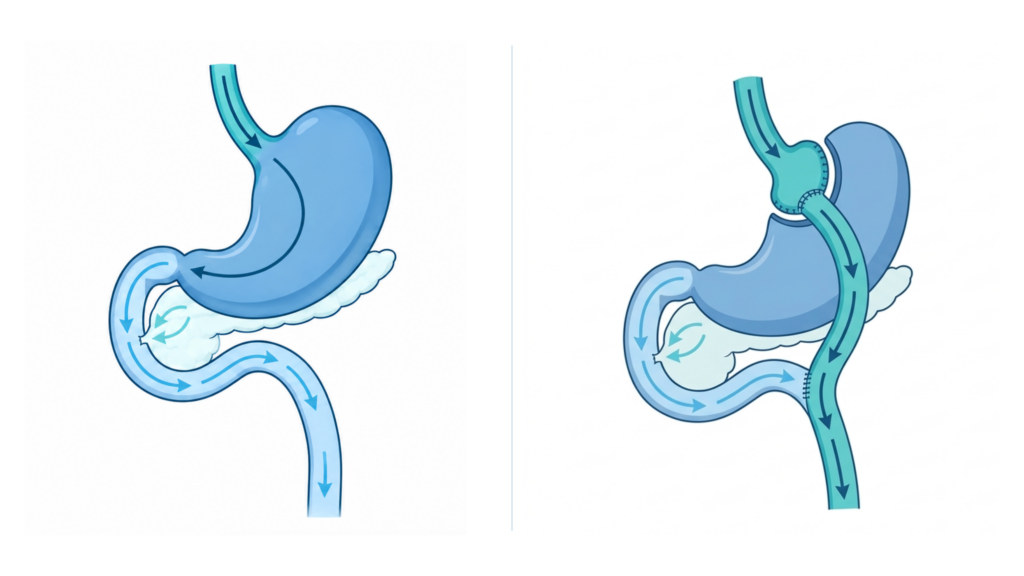
Roux-en-Y gastric bypass (sometimes spelled by-pass) changes both the stomach and the path food takes through the intestine.
A small pouch is created in the upper part of the stomach and separated from the rest of it. This pouch is then connected directly to the small intestine.
Food thus passes from the esophagus into the small gastric pouch, then into the alimentary limb.
Most of the stomach remains in place and stays connected to the pylorus and duodenum, but food no longer passes through it. Digestive secretions travel through the biliopancreatic limb and rejoin the food further along the intestine, at the jejunojejunal anastomosis.
It is this reconstruction that gives the Roux-en-Y gastric bypass its name.
Normal digestive anatomy
Roux-en-Y Gastric Bypass
How does the bypass work?
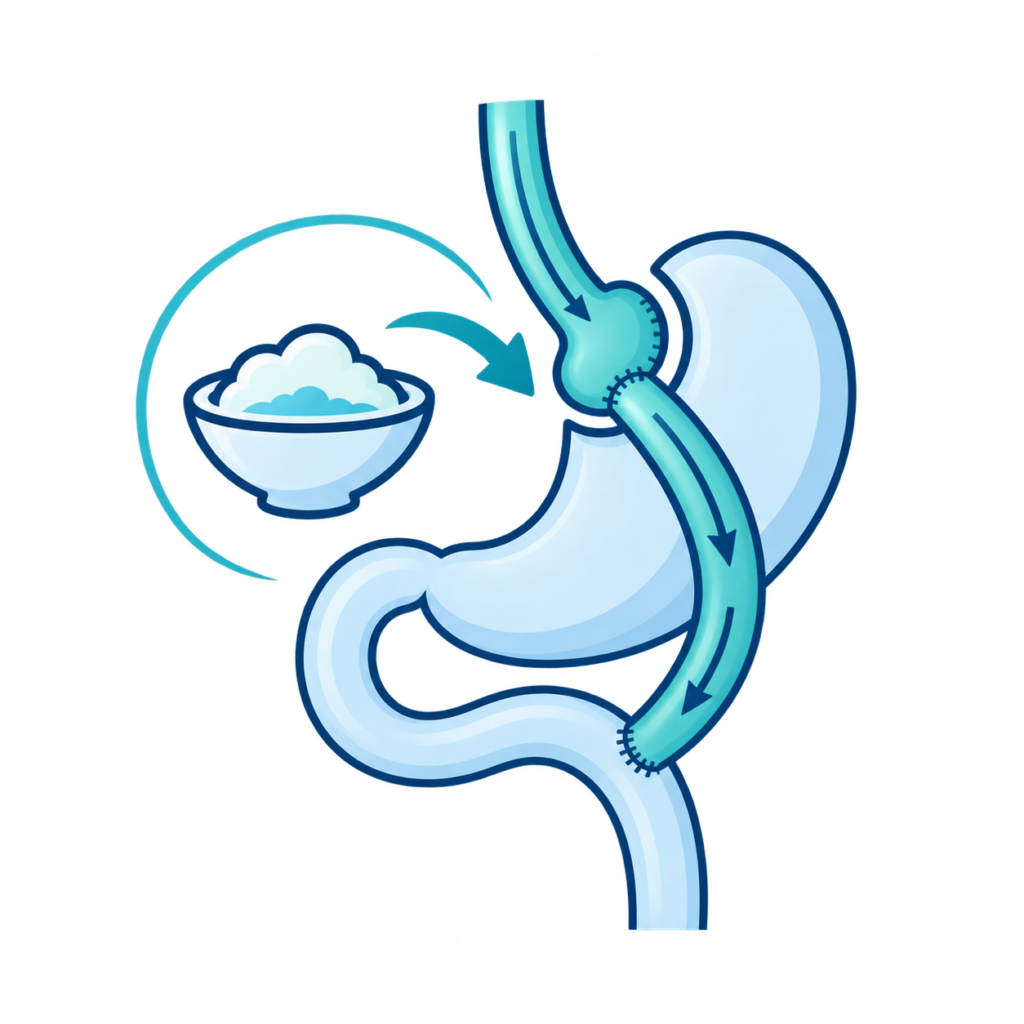
Reduced food quantities
The small gastric pouch allows satiety to be felt with smaller amounts of food than with a normal-sized stomach.
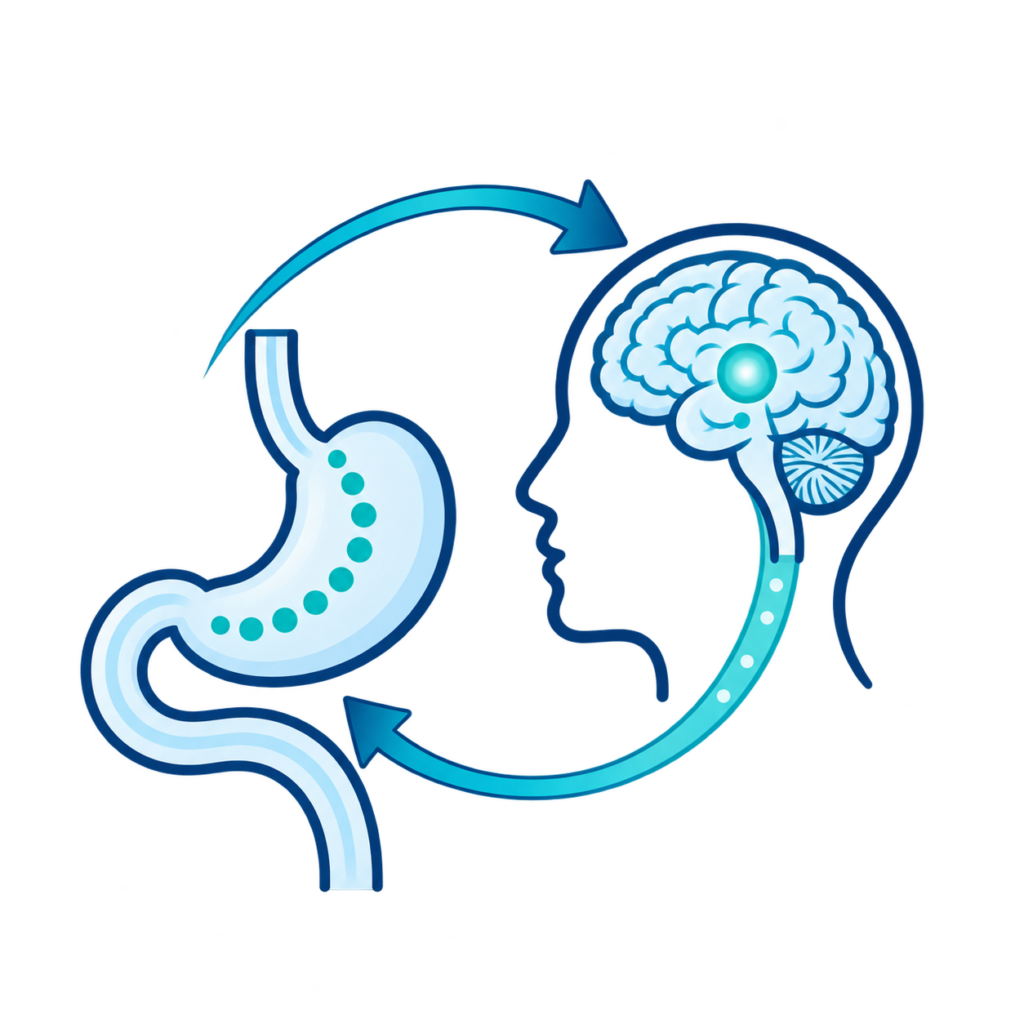
An effect on hunger and satiety
The change in the path food takes influences digestive and hormonal signals involved in hunger, satiety, and metabolic regulation.
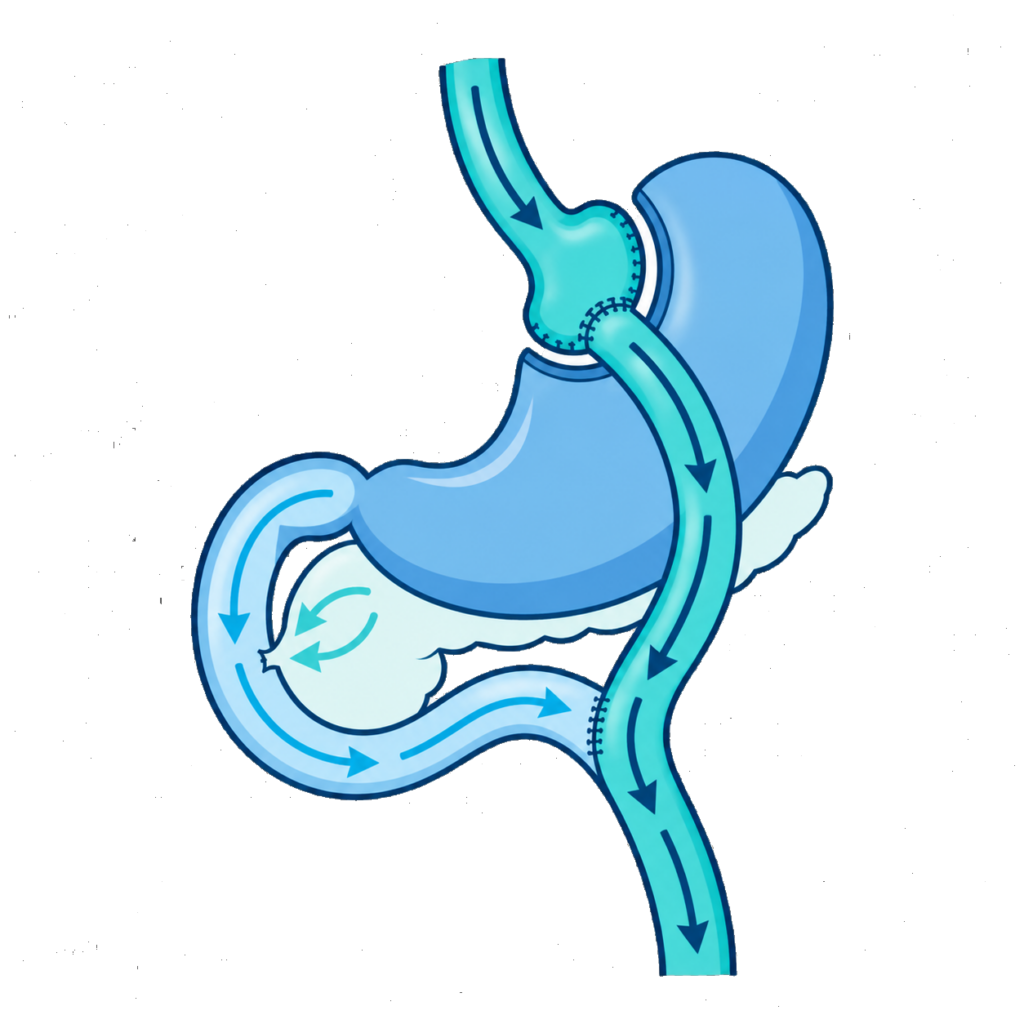
A changed digestive tract
Food no longer passes through most of the stomach or the duodenum. It rejoins digestive secretions further along the intestine.
The bypass thus combines several mechanisms and is not simply the creation of a “small stomach”.
Who can be offered a bypass?
An individualized medical decision
Bariatric surgery is not decided on the basis of weight alone.
In Switzerland, this is part of specialized care that meets the criteria defined by the Swiss Multidisciplinary Obesity Society (SMOB).
In adults, the indication for bariatric surgery requires in particular a BMI of at least 35 kg/m² and the failure of adequate weight-loss treatment over a total period of two years. The patient must also understand the dietary and lifestyle changes required after the procedure and commit to long-term follow-up.
Certain specific situations, particularly type 2 diabetes combined with a BMI between 30 and 35 kg/m², fall under specific criteria and specialized centers.
The indication is individualized.
But being eligible for bariatric surgery does not necessarily mean that the bypass is the most suitable procedure.
How does the pathway work?
The bypass is one step in a care pathway
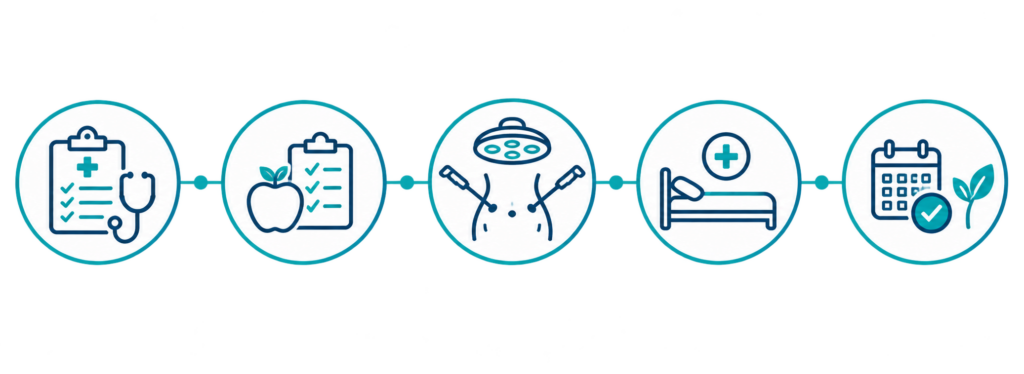
Evaluation
Medical and nutritional work-up, screening for associated conditions, and assessment of the individual situation.
Preparation
Information about the procedure, nutritional preparation, and organization of postoperative follow-up.
Procedure
Gastric bypass is performed under general anesthesia, laparoscopically whenever conditions allow.
Recovery
Postoperative monitoring and gradual resumption of eating according to the team’s protocol.
Follow-up
Regular long-term medical, nutritional, and biological check-ups, including with your primary care physician.
What benefits can be expected?
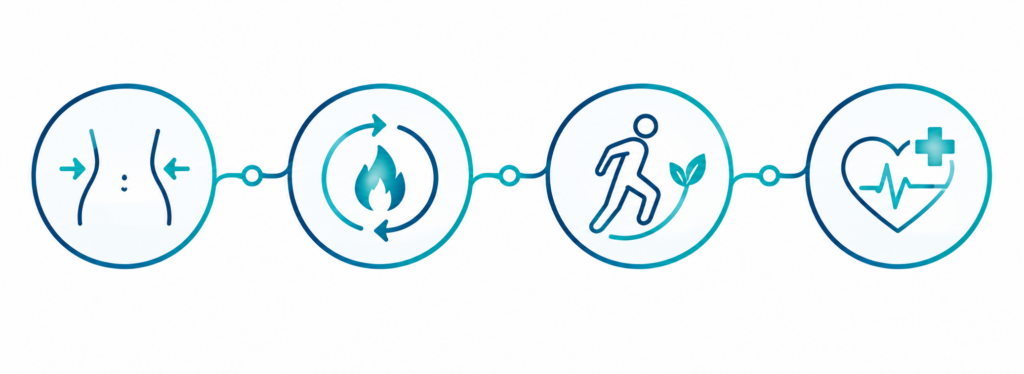
Effects on weight and metabolic health
Gastric bypass can achieve significant, lasting weight loss. It can also improve several conditions associated with obesity, particularly type 2 diabetes in some patients. Its metabolic effects can appear early and are not explained by weight loss alone.
Every journey is different
The outcome cannot be predicted precisely for any given person. It depends on many individual factors and long-term evolution.
Partial weight regain can also occur after bariatric surgery. It deserves evaluation when it becomes significant, as different care strategies may be considered.

What are the risks of gastric bypass?
Like any surgical procedure, the bypass carries early and late risks.
A digestive leak can occur at a suture or anastomosis and require prompt management.
Postoperative bleeding may require monitoring or, more rarely, an additional procedure.
The change to the intestinal tract carries a risk of certain mechanical complications, particularly bowel obstruction or internal hernia.
An ulcer can develop near the gastrojejunal anastomosis. Smoking and certain medications, particularly non-steroidal anti-inflammatory drugs, are recognized risk factors.
The rapid arrival of certain foods, particularly very sugary ones, in the intestine can cause faintness, palpitations, sweating, or digestive symptoms.
The bypass can promote certain vitamin and mineral deficiencies. Supplementation and blood tests are therefore part of long-term follow-up.
This list is not exhaustive. Individual benefits and risks are discussed during the consultation and the preoperative work-up.
Long-term follow-up
Surgery is one step. Follow-up is part of the treatment.
After a bypass, follow-up helps track the evolution of weight and eating habits, adjust supplementation, monitor certain biological parameters, and detect any complications early.
Taking vitamins and minerals, along with regular blood tests, are part of care after bypass surgery.
Medical Follow-up
Blood Tests
Vitamin Supplementation
Dietary Follow-up
Psychological Follow-up
Physical Activity Follow-up
BYPASS OR SLEEVE?
There is no single ideal bariatric procedure for every patient.
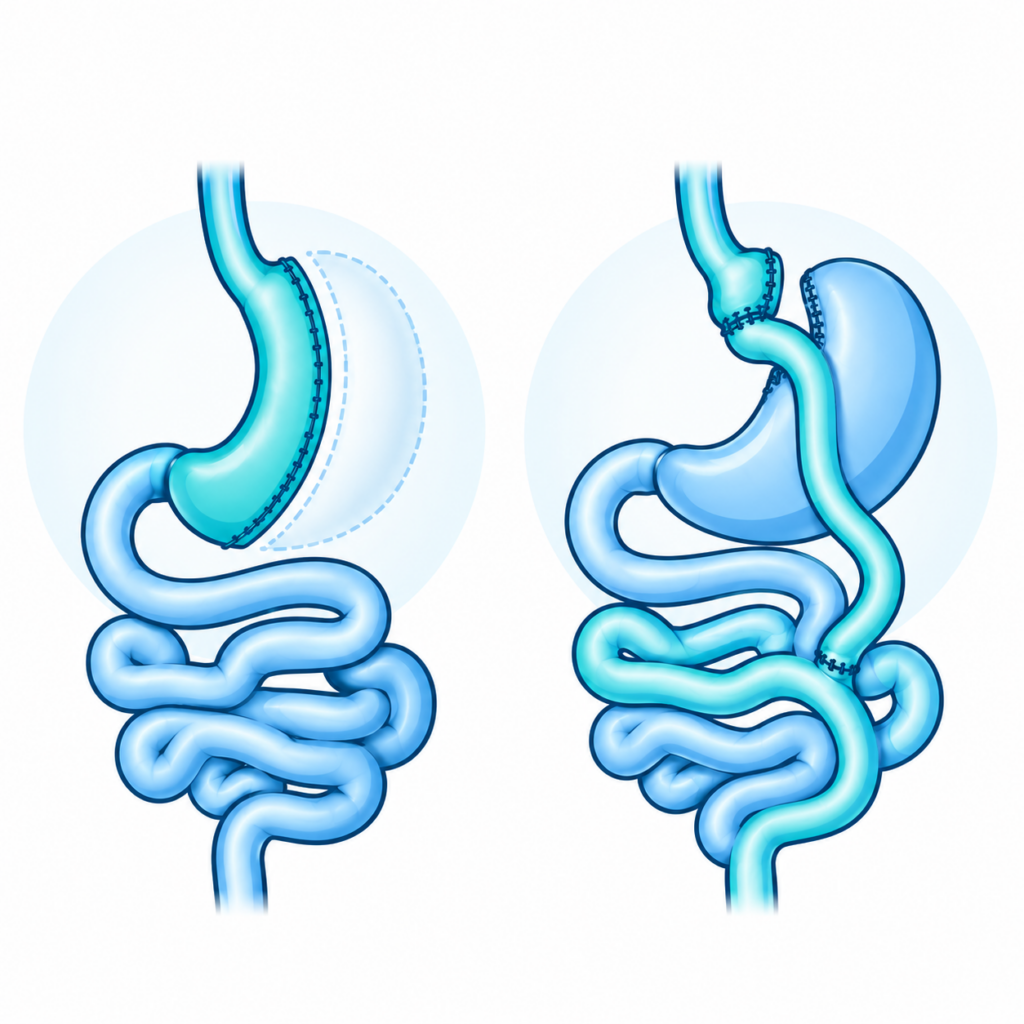
During a sleeve, a large portion of the stomach is removed to create a tubular stomach. The intestinal tract is not bypassed.
During a bypass, a small gastric pouch is created and connected to the small intestine. Most of the stomach remains in place but is no longer used by food.
These differences have consequences in particular on the mechanisms of action, gastroesophageal reflux, the risk of certain deficiencies, and the specific complications of each procedure.
The choice between gastric bypass, sleeve gastrectomy, and other treatment strategies is based on an individual evaluation.
Several factors can play a role in this decision:
- BMI and weight history;
- eating habits and behavior;
- the presence of diabetes or other metabolic conditions;
- the presence of gastroesophageal reflux or a hiatal hernia;
- medical and surgical history;
- current medications;
- the patient’s expectations and preferences.
The decision is made after a complete work-up and discussion with the patient as part of multidisciplinary care.
It is not about choosing the “most effective” operation in absolute terms, but the one best suited to the patient’s situation.
Frequently asked questions:
Weight loss can be significant, particularly during the first few months, but its extent and evolution vary from person to person.
Yes. Partial regain is possible in the long term. Significant regain may be evaluated and specifically managed.
No. In a classic Roux-en-Y gastric bypass, most of the stomach remains in place but food no longer passes through it.
Yes, supplementation and regular blood tests are part of follow-up after a bypass.
It refers to symptoms that can occur after certain foods, particularly very sugary ones, arrive rapidly in the intestine.
In some patients with type 2 diabetes, a significant improvement in metabolic control can be observed after surgery.
Anatomical restoration may be technically possible in certain situations, but it requires complex surgery. The bypass should therefore be considered a permanent change.
The length of leave depends on individual recovery and the nature of the occupation. It is specified as part of postoperative follow-up.
Considering obesity surgery?
Every situation is different. The consultation allows your history, health status, and expectations to be assessed, and the different treatment options to be discussed.
The goal is to determine, together with you, the strategy best suited to your situation.