
COLORECTAL SURGERY
Colectomy
Removing part of the colon while preserving digestive continuity whenever possible
A colectomy is a surgical procedure that involves removing a diseased portion of the colon.
The extent of the resection depends on the location and nature of the condition. After removing the affected portion, the surgeon can usually restore digestive continuity by joining the two ends of the intestine together: this is called an anastomosis.
Today, colectomy can often be performed using a minimally invasive approach, either laparoscopic or robot-assisted.
What Is a Colectomy?
Removing the diseased portion of the colon
The colon makes up most of the large intestine. It extends from the cecum, located on the right side of the abdomen, to the rectum.
A colectomy involves removing a larger or smaller portion of the colon.
The term therefore does not refer to a single operation: the resection is tailored to the location and extent of the disease.
After removing the affected portion, the surgeon generally aims to restore digestive continuity by joining the remaining intestinal segments together. This junction is called a digestive anastomosis.
The goal is not to systematically remove “the colon,” but to perform the resection appropriate to the disease while preserving normal digestive continuity as much as possible.
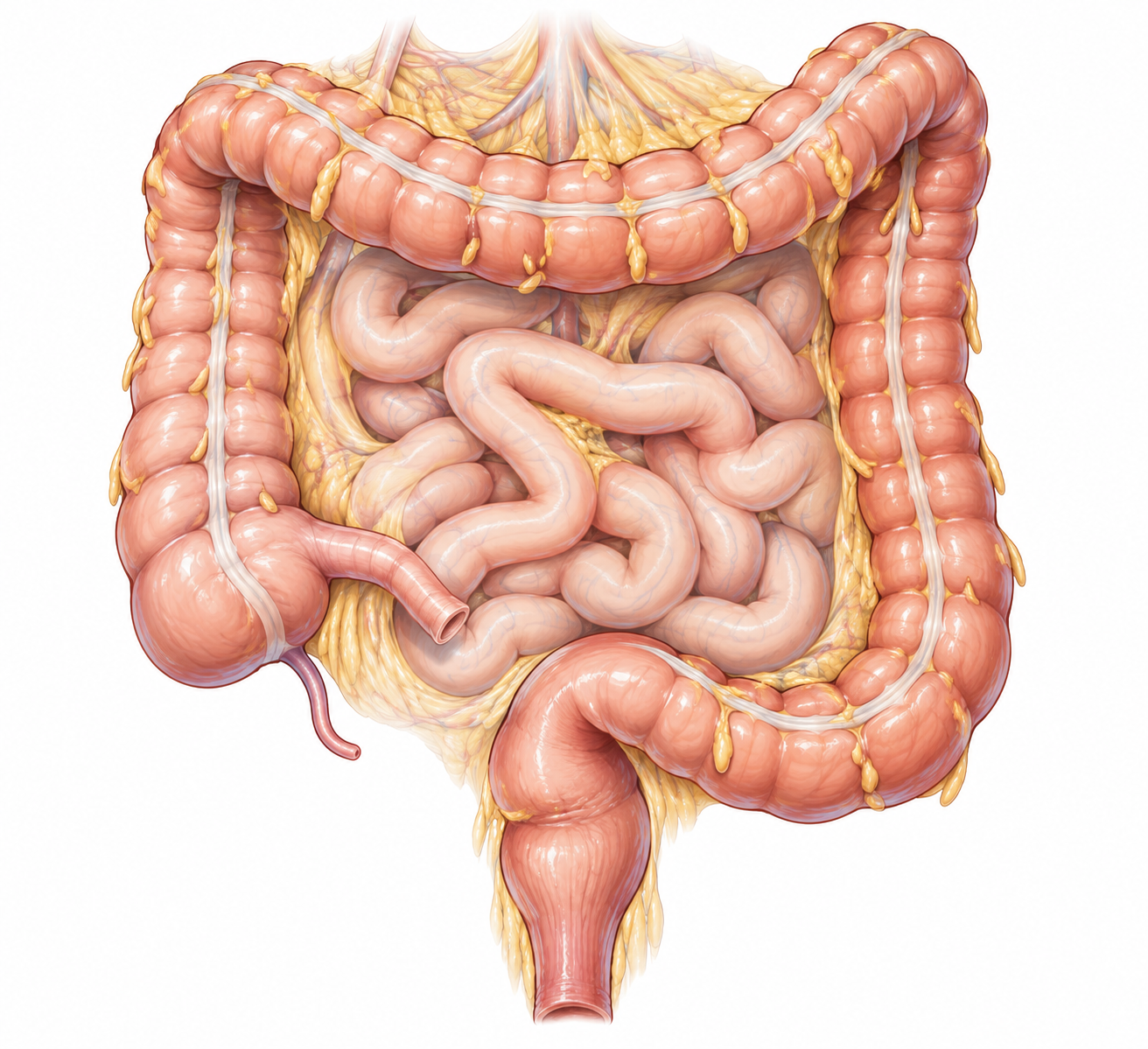
When Might a Colectomy Be Necessary?
A colectomy may be recommended in different situations.
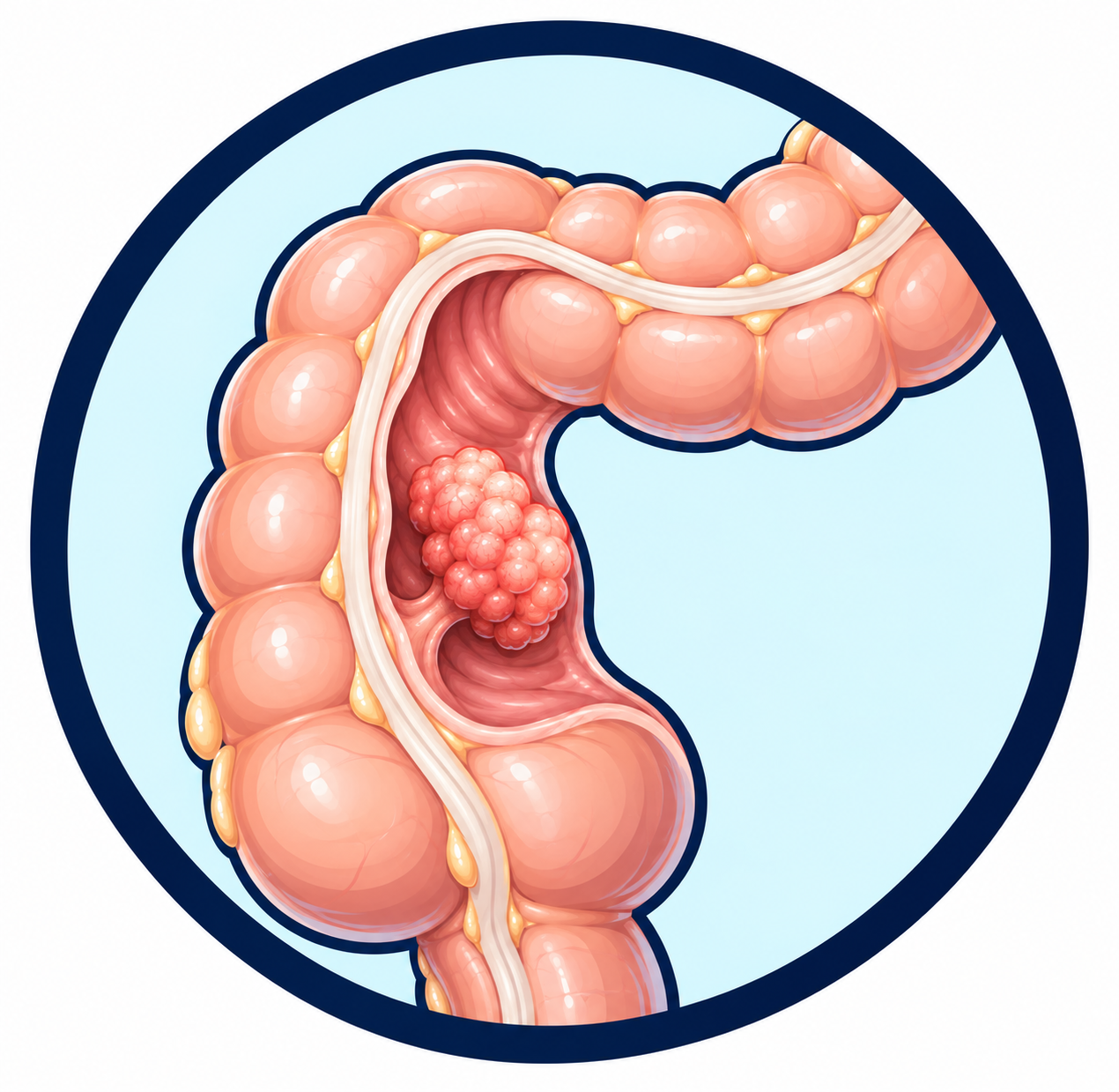
Colon Cancer
Surgery generally involves removing the colonic segment bearing the tumor along with the associated tissue and lymph nodes. Learn more about colon cancer.
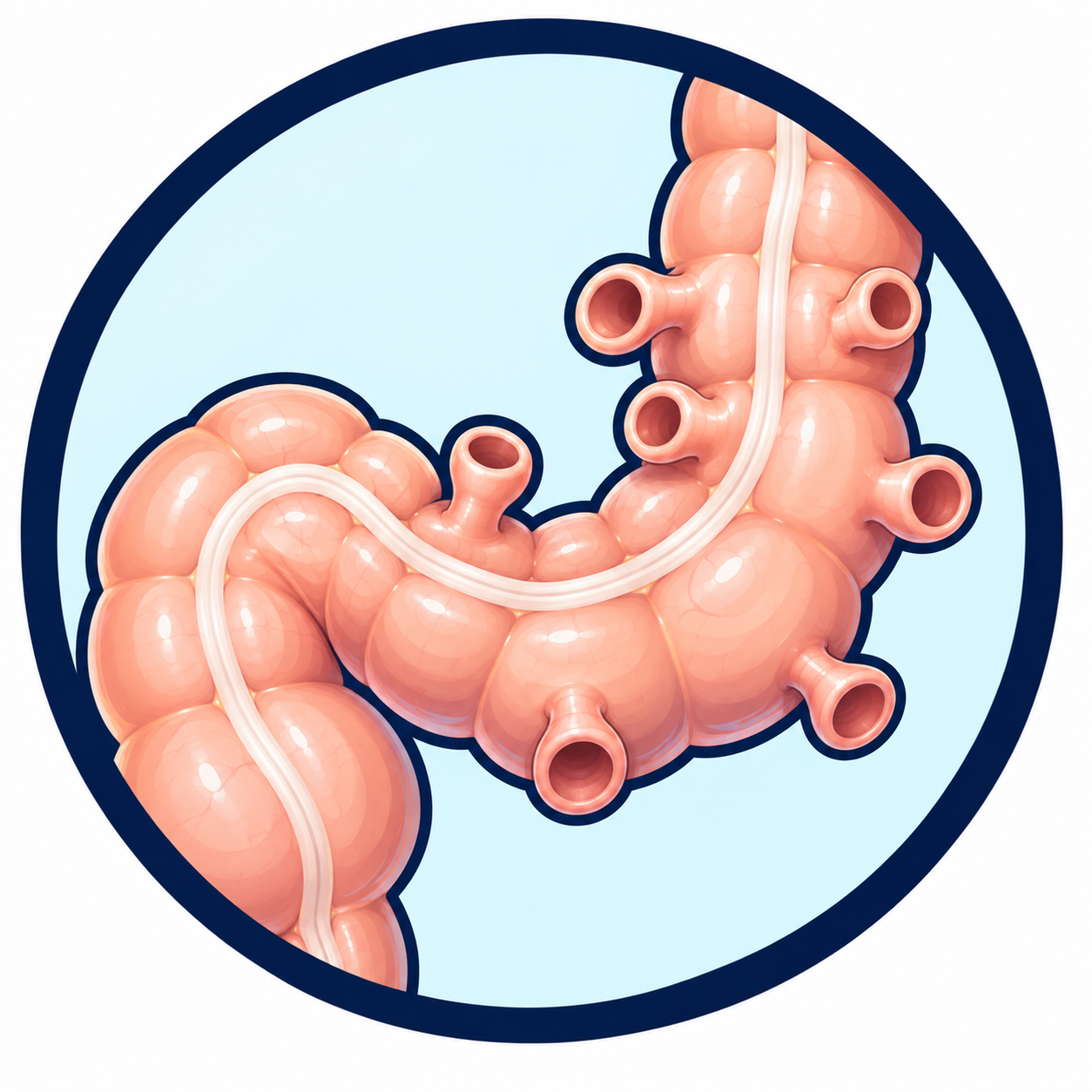
Diverticulitis
Some complicated or recurrent forms may lead to a discussion about resecting the sigmoid colon. Learn more about diverticulitis.
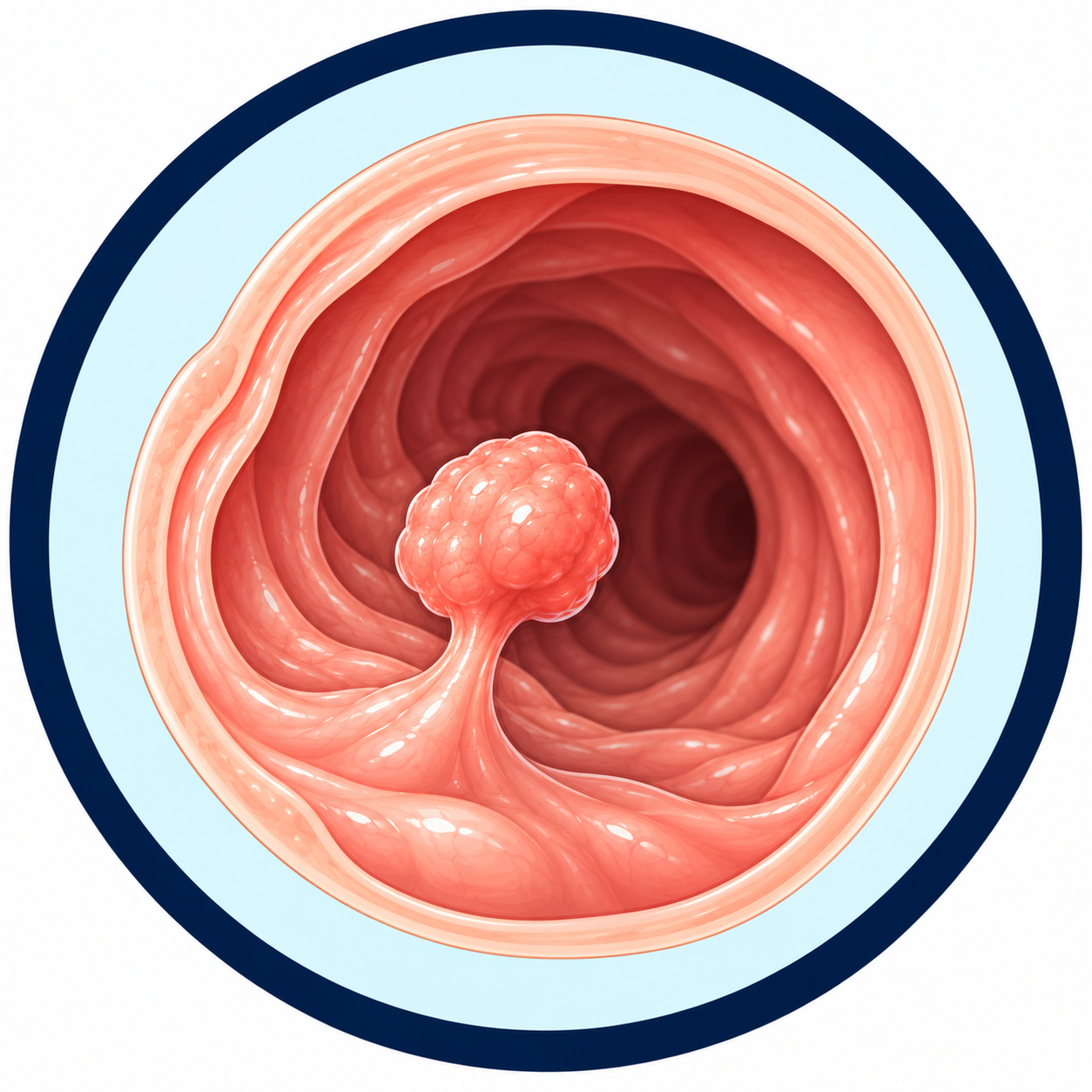
Polyps
Some polyps cannot be removed satisfactorily or safely enough by endoscopy.
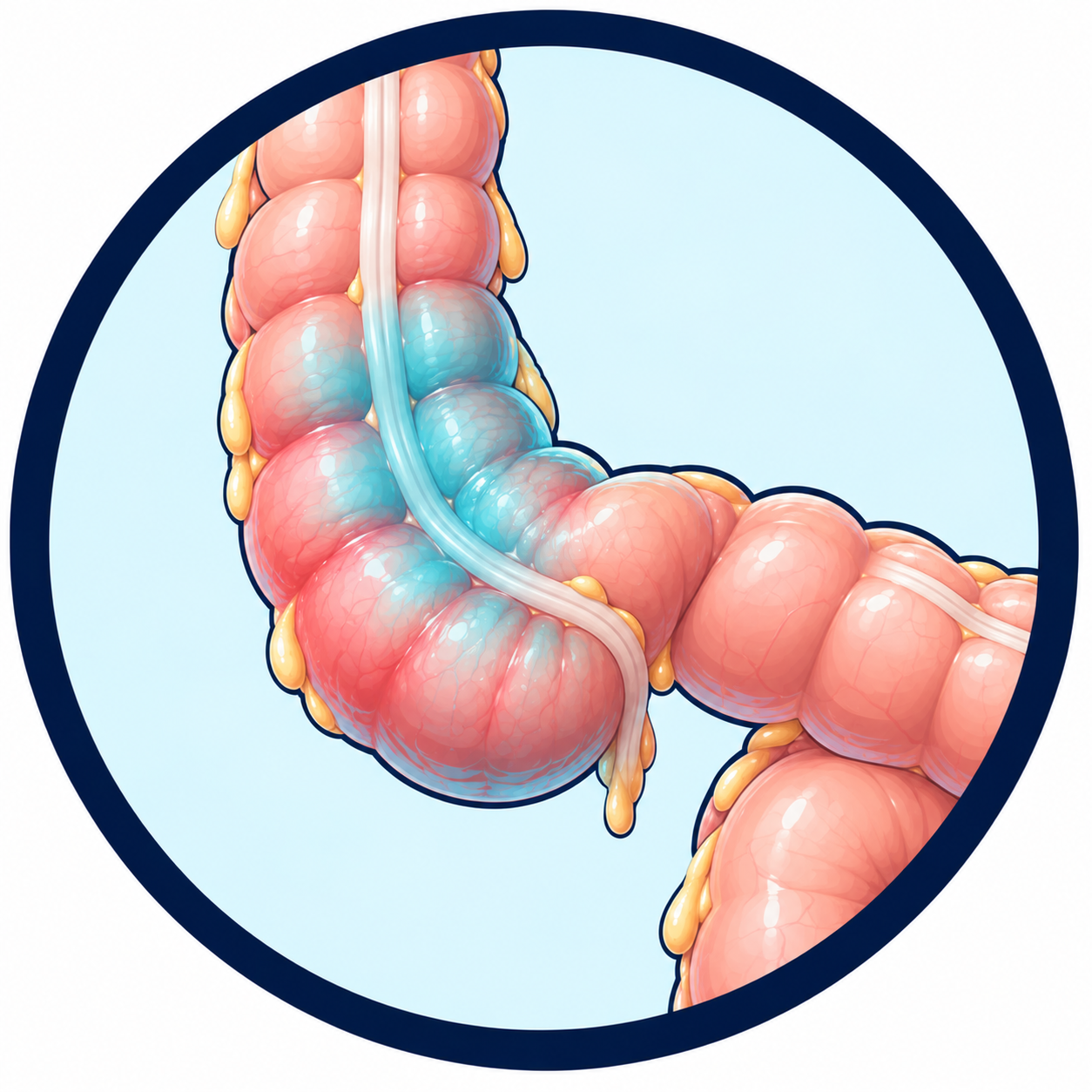
Inflammatory Diseases or Other Conditions
More rarely, certain inflammatory, ischemic, obstructive or other colonic conditions may also require a colectomy.
The decision to perform a colectomy therefore depends on the disease, its location, its progression and each patient’s individual situation.
Which Part of the Colon Needs to Be Removed?
The part of the colon removed depends mainly on the location of the disease and the type of condition.
A distinction is made in particular between right colectomy and left colectomy.
Other resections are possible depending on the exact location, particularly in the transverse colon or the sigmoid colon.
What Is a Right Colectomy?
A right colectomy involves removing the right side of the colon.
Depending on the situation and indication, the resection typically includes the cecum and ascending colon, as well as a variable portion of the transverse colon and terminal ileum.
After resection, digestive continuity is usually restored by joining the small intestine to the remaining colon. This reconstruction is called an ileocolic anastomosis.
In the context of cancer, the extent of the colonic and mesocolic resection is tailored to the tumor’s location and the relevant vascular and lymphatic territories.
A right colectomy therefore does not simply consist of removing a visible portion of the colon: the resection is tailored to the disease and its context.
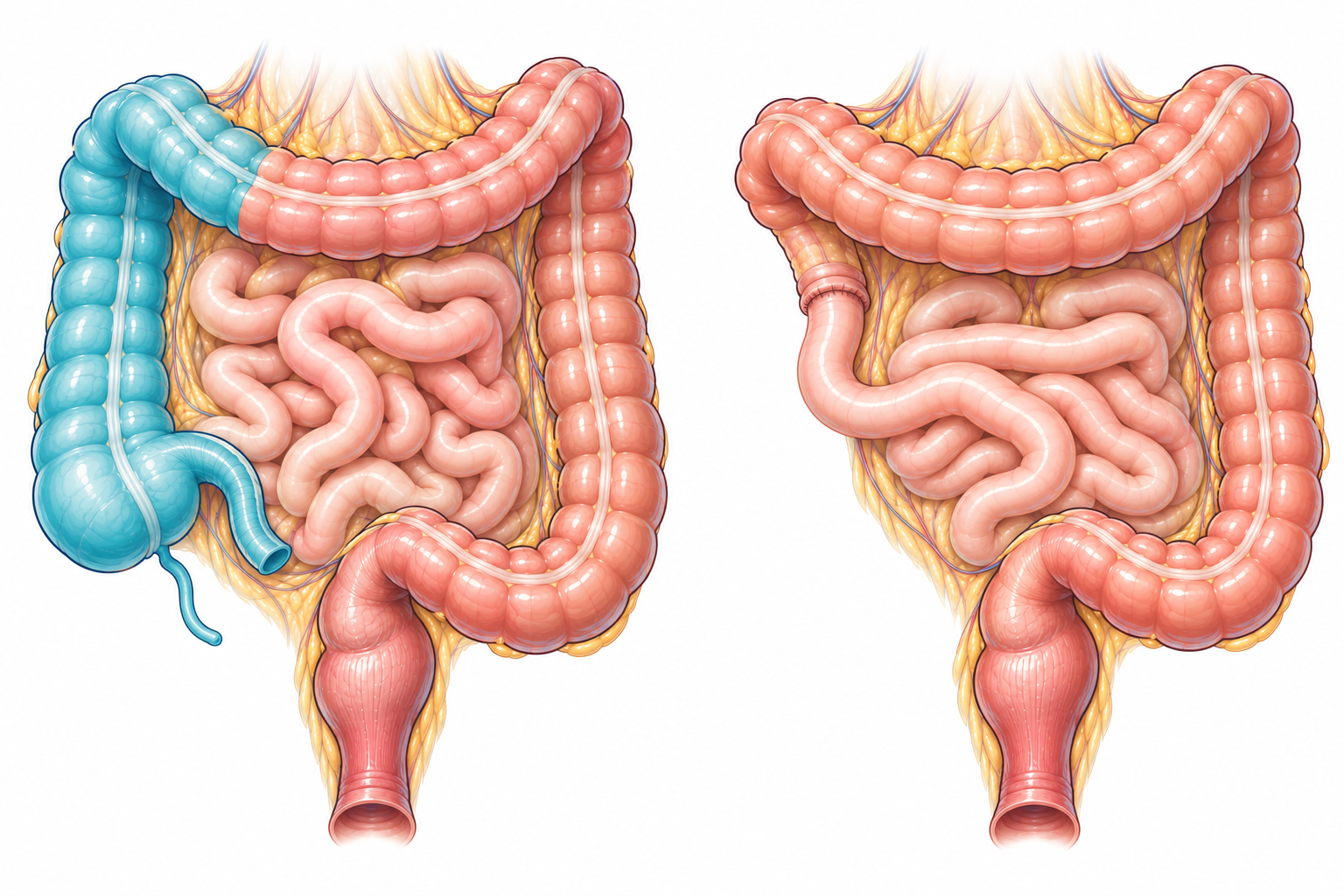
What Is a Left Colectomy?
A left colectomy involves a portion of the colon located on the left side of the abdomen.
The exact extent of the resection again depends on the location and nature of the disease.
After resection, digestive continuity can usually be restored by an anastomosis between the remaining digestive segments.
In certain situations, particularly for conditions affecting the sigmoid colon, the resection may primarily involve the sigmoid: this is then called a sigmoidectomy.
The terms left colectomy and sigmoidectomy therefore do not refer to exactly the same extent of resection.
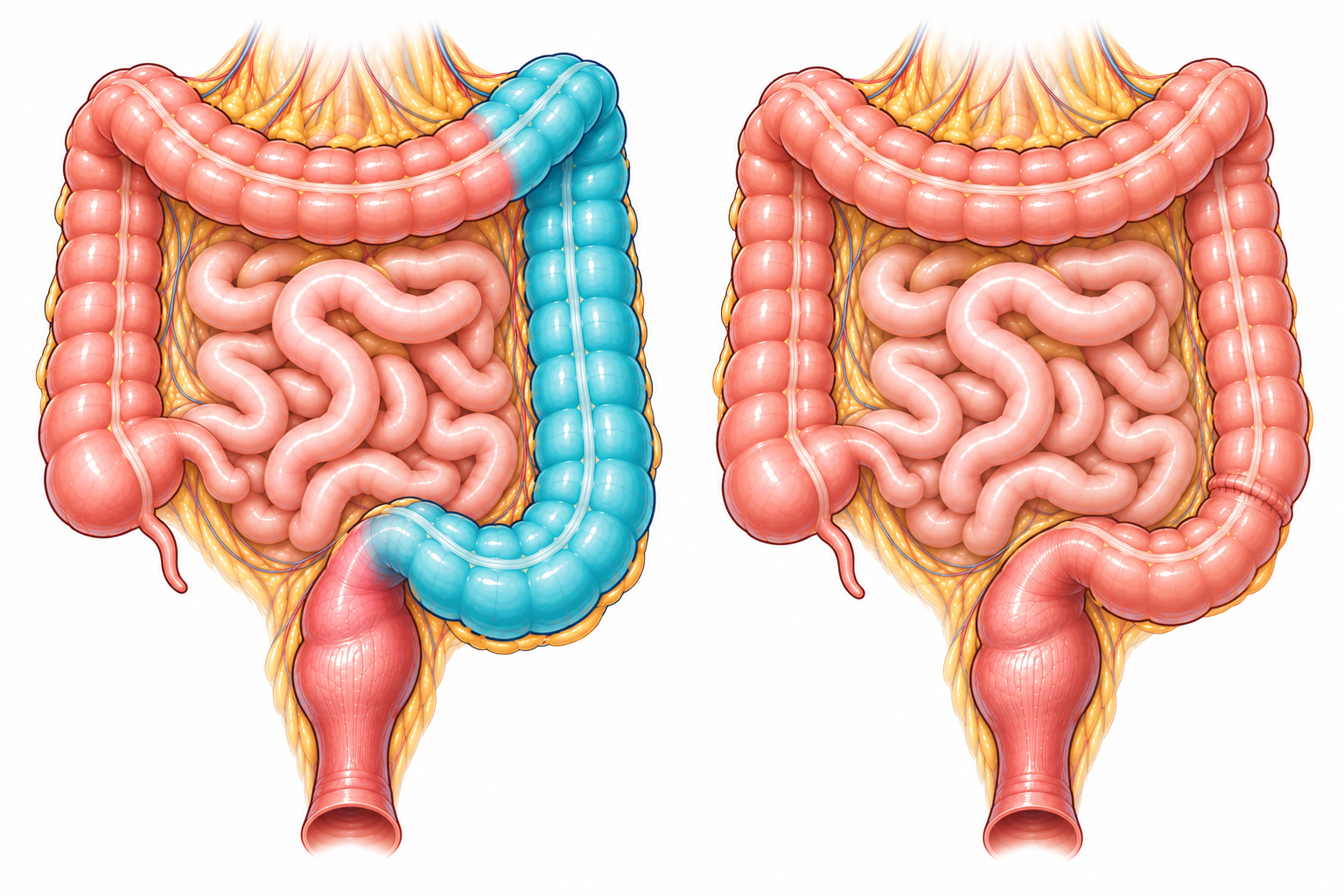
How Is Digestive Continuity Restored?
After removing the diseased portion of the colon, the two digestive ends can generally be joined together. This surgical junction is called an anastomosis.
It can be performed using different configurations and techniques depending on the resection performed and the anatomical situation.
The goal is to achieve a well-vascularized junction, free of excessive tension, that allows digestive contents to pass through.
In certain situations, a temporary or permanent stoma may nevertheless be necessary.
A stoma is therefore not systematic after a colectomy. Its necessity depends on the type of procedure and the operative conditions.
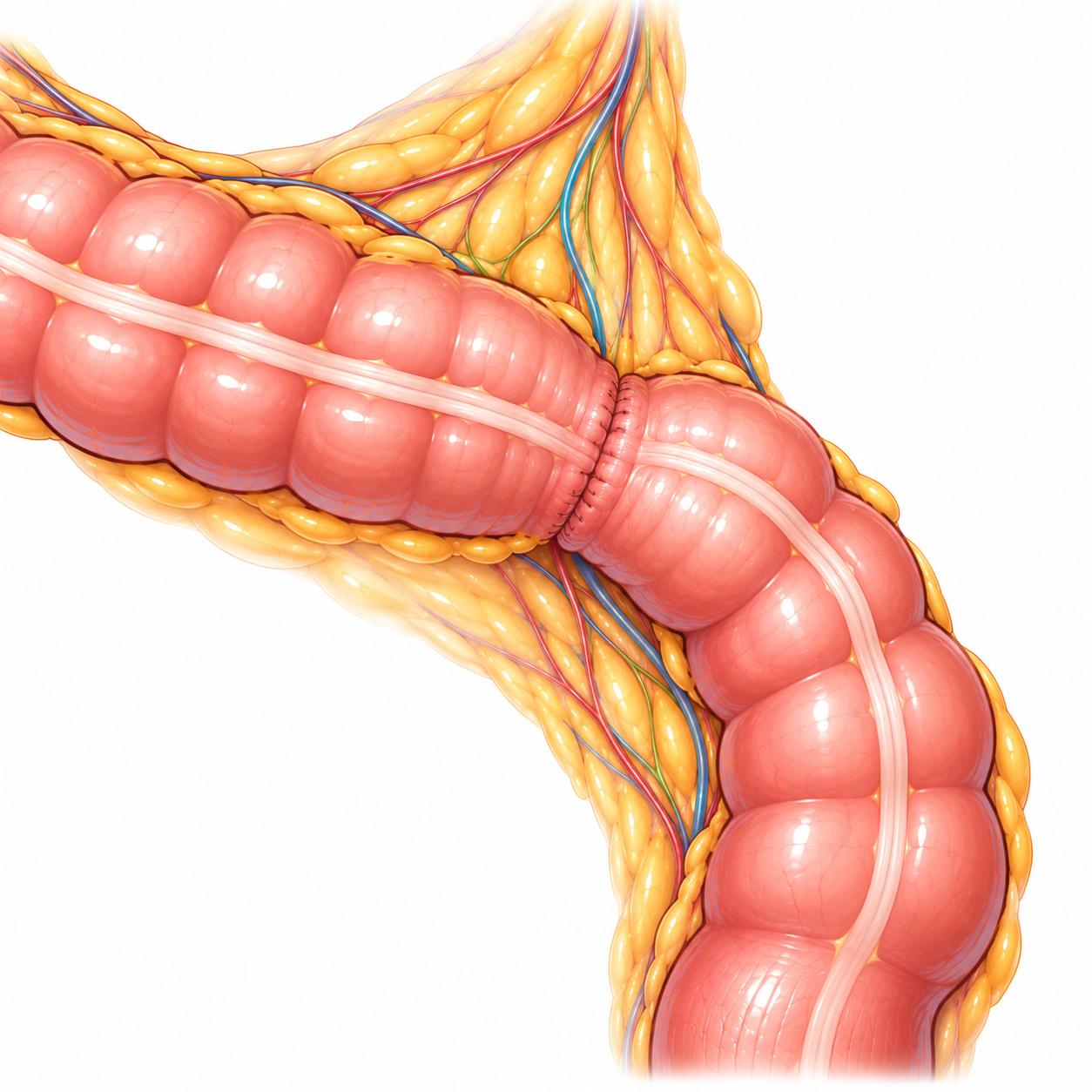
How Is a Colectomy Performed?
A colectomy is performed under general anesthesia.
The surgeon begins by exploring the abdominal cavity and precisely identifying the affected area.
The portion of the colon to be removed is then freed from its attachments. The vessels corresponding to the resection are controlled and the affected portion is removed.
When conditions allow, an anastomosis is then performed to restore digestive continuity.
In cancer surgery, the resection also follows oncological principles tailored to the tumor’s location.
The exact extent of the procedure is therefore not the same for every patient: it depends on the disease and its location.
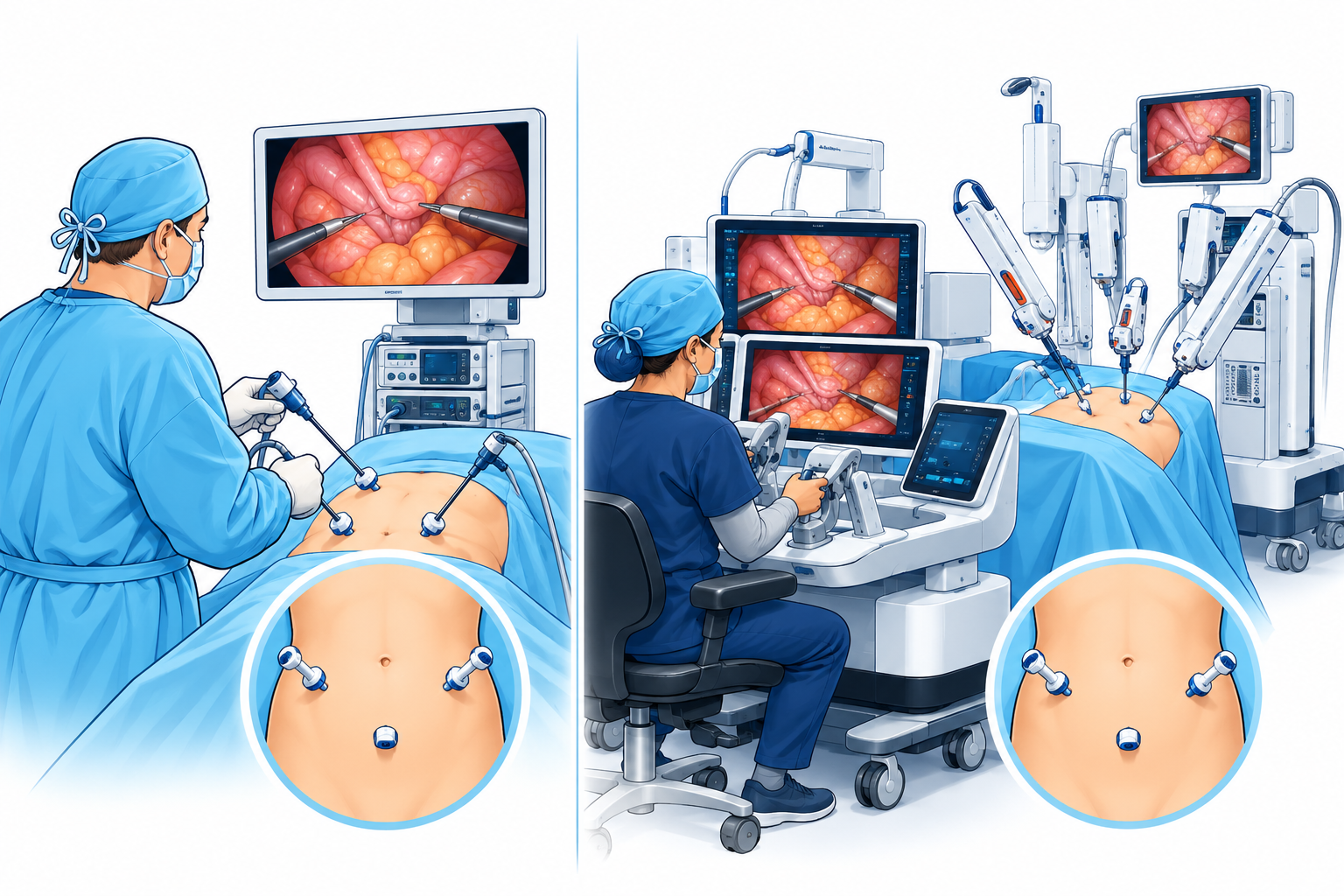
Laparoscopy or Robot-Assisted Surgery
Two Minimally Invasive Approaches
Colorectal surgery can now be performed using different surgical approaches.
Laparoscopy
Laparoscopy makes it possible to operate using a camera and instruments inserted through several small abdominal incisions.
Robot-Assisted Surgery
In certain situations, a colectomy can also be performed with robotic assistance. The surgeon controls the instruments from a console: the robot does not perform any movement autonomously.
Minimally invasive surgery is now an integral part of modern colorectal surgery; SAGES references cover right and left colectomies performed both laparoscopically and robotically. (Source: SAGES Manual of Colorectal Surgery)
Is a Stoma Always Necessary?
A stoma involves bringing part of the intestine to the skin, either temporarily or permanently, so that stool can be collected in a pouch.
It is not systematically necessary after a colectomy.
Whether it is needed depends in particular on the type of resection, the location of the anastomosis, the disease being treated and the conditions encountered during surgery.
In certain situations, a stoma may be created temporarily to protect an anastomosis or when it is not advisable to restore digestive continuity immediately.
Whenever the possibility of a stoma arises, it is discussed before surgery whenever the situation allows.
What Are the Risks of a Colectomy?
A major surgery that requires appropriate monitoring.
A leak may exceptionally occur at the digestive junction. This is called an anastomotic fistula or leak. It may require additional treatment and, in certain situations, further surgery.
Bleeding may occur during or after the procedure.
An infection of the abdominal wall or abdominal cavity may occur.
Bowel function may be temporarily slowed after surgery. This is called postoperative ileus.
As with any major abdominal surgery, respiratory, urinary, cardiovascular or thromboembolic complications may in particular occur.
When a minimally invasive procedure cannot be safely continued, conversion to open surgery may be necessary.
Individual risks depend on the procedure, the disease being treated and the patient’s general health. They are discussed during the preoperative consultation.
After the Procedure
Modern care after colorectal surgery is based on several principles designed to promote recovery.
Mobilization is generally encouraged early on.
Eating is resumed gradually according to the situation and tolerance.
Pain and nausea are managed to facilitate mobilization and the resumption of activities.
Enhanced recovery protocols after colorectal surgery notably recommend early, progressive mobilization as well as early resumption of eating when the situation allows. (Source: Springer Nature, Surgical Endoscopy)
The length of hospital stay and the return to usual activities vary depending on the type of colectomy, how the procedure went and each patient’s recovery.
Recovery after a colectomy is gradual. Personalized instructions are given before leaving the hospital.

How Does Bowel Function After a Colectomy?
After a partial colectomy, a large part of the digestive tract remains in place and continues to function.
Bowel function may nevertheless be temporarily different after surgery.
The frequency and consistency of stools may change during the recovery period.
These changes depend in particular on the part of the colon removed, the extent of the resection and the individual situation.
Digestive adaptation occurs gradually.
A partial colectomy therefore does not mean that bowel function disappears: the digestive system adapts to the new anatomy.
Personalized Care
Tailoring the Procedure to the Disease and the Patient
The decision to perform a colectomy is based on a precise analysis of the disease, its location, the tests performed and the patient’s general health.
When surgery is indicated, the goal is to determine the necessary resection and the most appropriate surgical approach.
The possibility of restoring digestive continuity, the potential risk of a stoma and the different stages of recovery are explained before surgery.
These discussions make it possible to clearly explain the planned course of treatment and the expected aftermath.
Dr Pierre Fournier
General and Visceral Surgery
[Real photo of Dr Fournier — to be added once available]
Frequently Asked Questions
The difference depends on the part of the colon removed. A right colectomy involves the cecum and ascending colon, with a variable extent depending on the indication; reconstruction is generally performed between the ileum and the remaining colon. A left colectomy involves a portion of the colon located on the left side, and its reconstruction depends on the exact extent of the resection.
A sigmoidectomy mainly targets the sigmoid colon. A left colectomy may involve a more extensive portion of the left colon.
No. A stoma is not systematic after a colectomy. Whether it is needed depends in particular on the disease, the resection performed and whether the conditions allow a safe anastomosis to be performed.
An anastomosis is the junction created between two digestive segments to restore continuity after the resection of part of the intestine.
Most patients gradually return to their usual activities. Bowel function may be altered, particularly at first, and depends on the part of the colon removed.
Yes. Many colorectal resections can be performed using minimally invasive surgery. Current surgical references cover right and left colonic resections performed both laparoscopically and robotically. (Source: SAGES Manual of Colorectal Surgery)
Yes, in certain situations. The robot is an operative platform controlled by the surgeon and does not perform the procedure autonomously. Both robotic and laparoscopic approaches are used in minimally invasive colorectal surgery. (Source: SAGES Manual of Colorectal Surgery)
Recovery depends on the resection, the surgical approach, general health and the postoperative course. Modern recovery programs after colorectal surgery notably promote early mobilization and early eating when the situation allows. (Source: Springer Nature, Surgical Endoscopy)
It may be different during the recovery period. Its frequency and consistency may change before gradually stabilizing.
When a colectomy is performed for cancer, the procedure must also follow the principles of oncological surgery and includes a lymphatic resection appropriate to the relevant territory.
Has a Colectomy Been Recommended to You?
The indication and extent of a colectomy depend on the disease and its location. The consultation allows us to review the diagnosis, the tests performed, the type of resection being considered, the surgical approach and the digestive reconstruction options.