
COLORECTAL SURGERY
Colon Cancer
Understanding diagnosis and the principles of surgical treatment
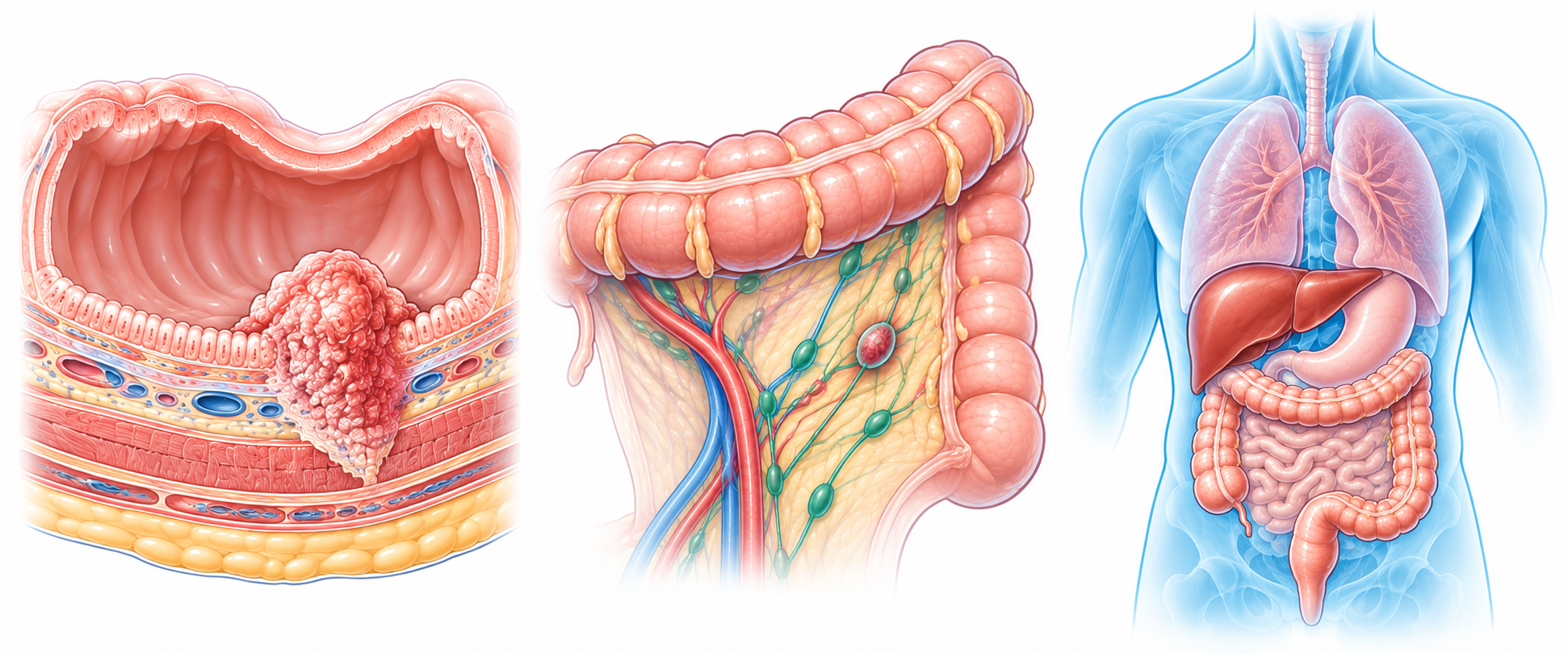
Colon cancer develops from cells in the wall of the large intestine.
It can appear in different parts of the colon and remain silent for a long time.
When a tumor is discovered, several tests help determine precisely its location, nature and extent before defining the treatment strategy.
When the disease is localized and operable, surgery plays a central role in treatment.
What is colon cancer?
A tumor that develops in the wall of the large intestine
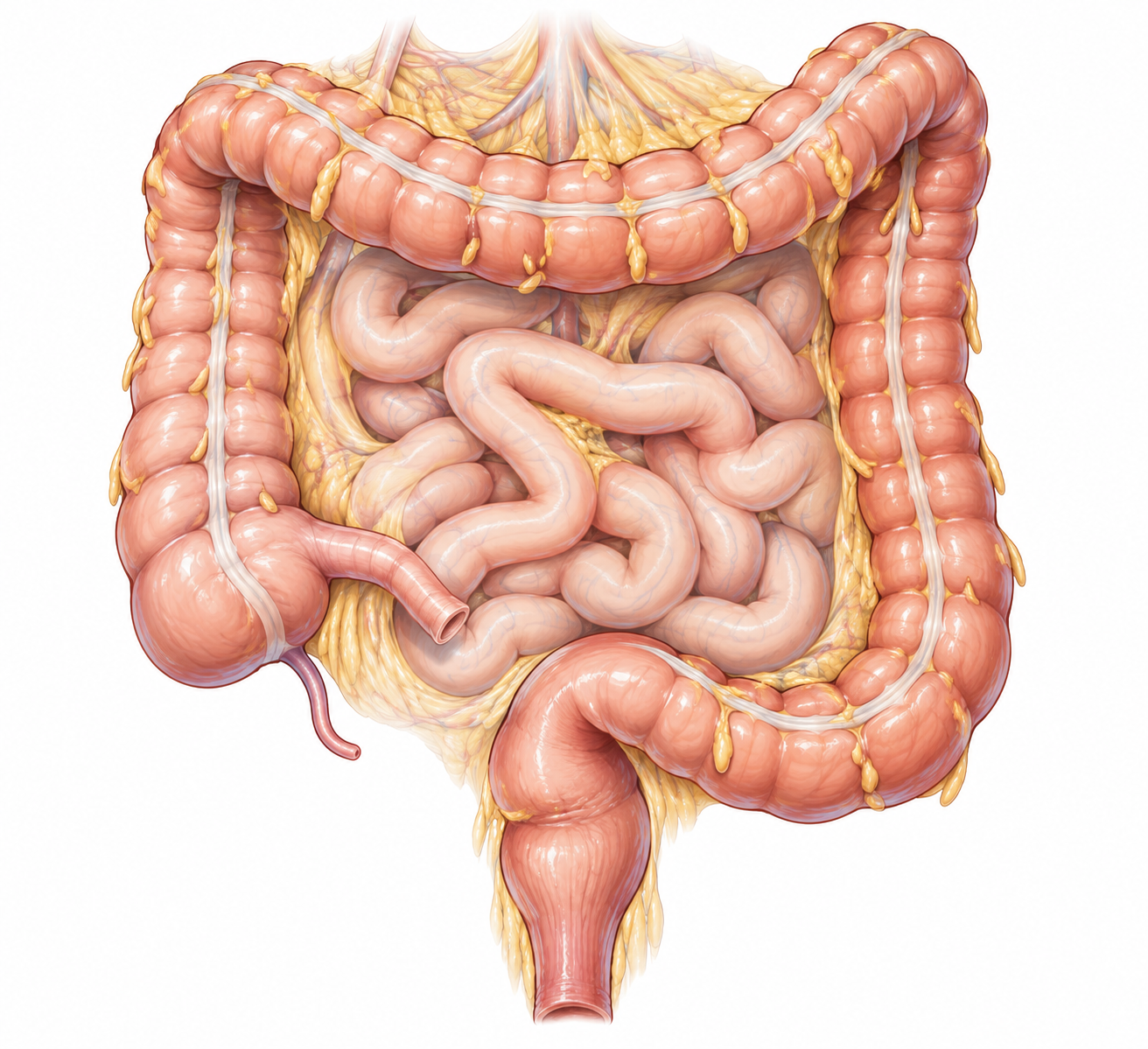
The colon makes up most of the large intestine. It includes several segments :
- the cecum
- the ascending colon
- the transverse colon
- the descending colon
- the sigmoid colon
The rectum then forms the terminal part of the large intestine. Its management involves specific considerations, detailed in our page on rectal cancer.
Most colon cancers are adenocarcinomas, meaning cancers that develop from the glandular cells of the colonic mucosa.
The cancer can gradually spread through the different layers of the colon wall and, in some situations, reach the lymph nodes or other organs.
Colon cancer and rectal cancer both belong to the colorectal cancer family, but their management differs in important ways. They are therefore covered separately on this site.
How does colon cancer develop?
Some cancers develop gradually from a polyp
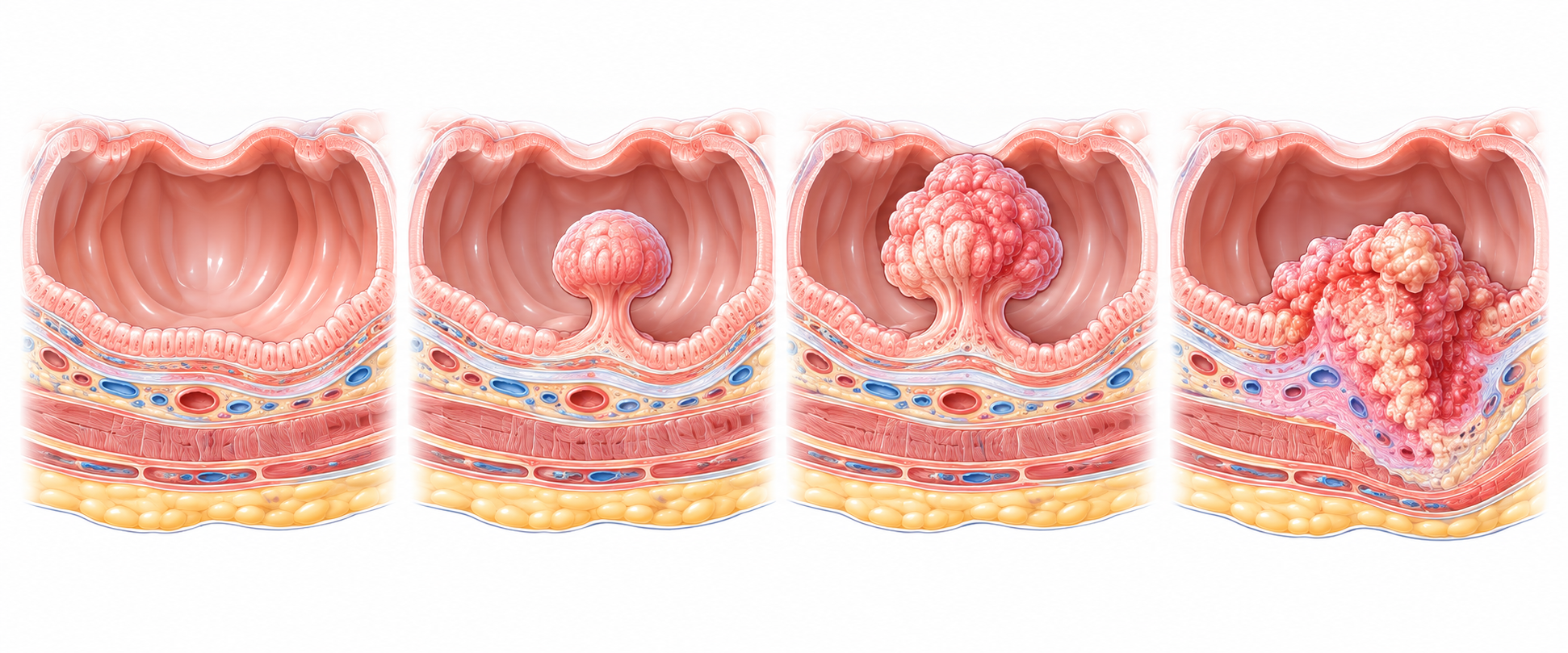
Some colorectal cancers develop from adenomatous polyps or other precancerous lesions of the mucosa.
A polyp is not necessarily a cancer.
Some lesions can, however, gradually acquire cellular abnormalities and progress to an invasive cancer.
This progression explains the major value of screening and colonoscopy, which can detect and sometimes remove certain lesions before they progress.
What are the symptoms of colon cancer?
A disease that can remain silent for a long time
Colon cancer can be discovered before symptoms appear, particularly through screening.
When present, symptoms can vary depending on the location and size of the tumor. They may include :
- a persistent change in bowel habits
- blood in the stool
- abdominal pain or discomfort
- unusual fatigue
- anemia, particularly due to iron deficiency
- unexplained weight loss in some cases
Some tumors may also be discovered as a result of a complication such as bowel obstruction.
These symptoms do not necessarily mean cancer is present. However, they warrant investigation when they persist or are unexplained.

How is colon cancer diagnosed?
Colonoscopy allows the colon to be examined and biopsies to be taken
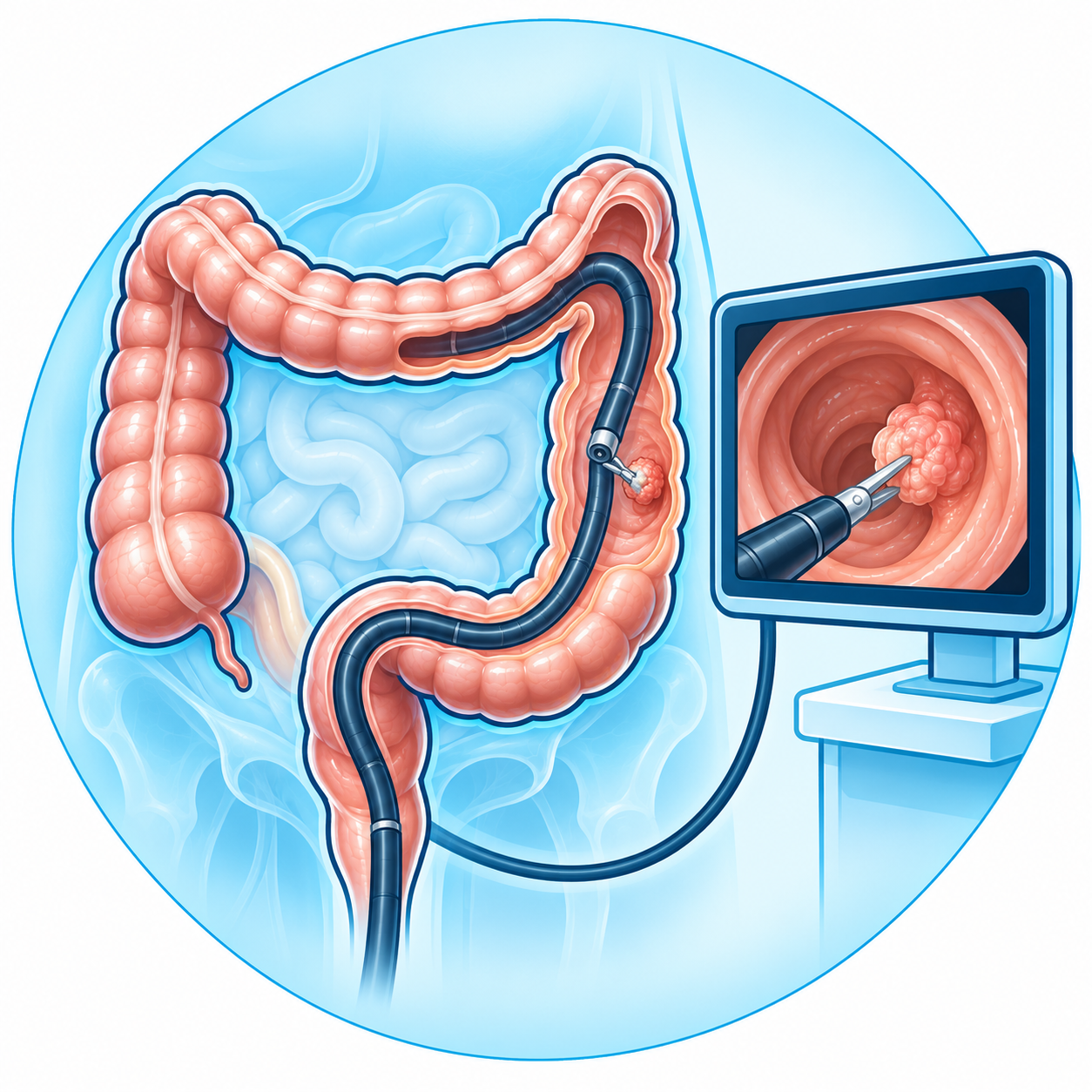
When an abnormality is suspected, colonoscopy allows the inside of the colon to be examined directly.
It allows any lesion to be located and biopsies to be taken.
The samples are then examined under a microscope by the pathologist to determine the nature of the lesion.
This histological analysis confirms or rules out the diagnosis of cancer.
Whenever possible, the entire colon is examined to look for any other lesions.
What work-up is done after diagnosis?
Determining the extent of the disease before choosing treatment
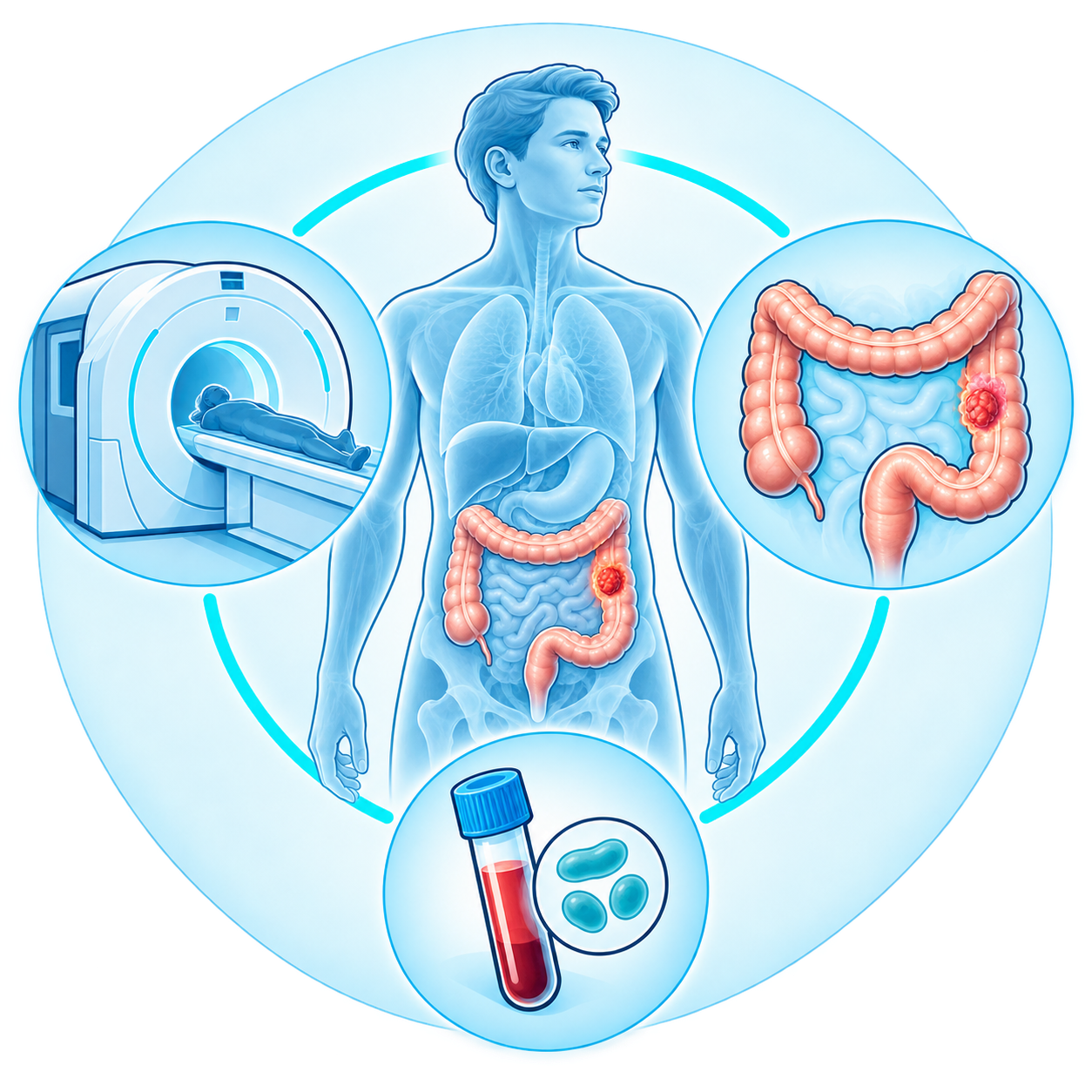
Once the diagnosis is established, a staging work-up is carried out. It helps determine, in particular :
- the location of the tumor
- its local extent
- any possible lymph node involvement
- whether or not there are distant lesions
A CT scan of the chest, abdomen and pelvis is part of the standard work-up.
Blood tests are also carried out.
Measuring CEA, a tumor marker, may be done before treatment. It cannot diagnose cancer on its own, but can be useful in management and follow-up.
Other tests may be indicated in certain specific situations.
What does the stage of a colon cancer mean?
Assessing how far the disease has progressed
The stage describes the extent of the cancer in the body. It takes into account, in particular :
T — Tumor
How deeply the tumor extends into the colon wall and, potentially, into nearby structures.
N — Nodes
Whether or not tumor cells are present in the regional lymph nodes.
M — Metastasis
Whether or not there is distant spread.
This information is then used to group the disease into different stages.
The final stage can sometimes be established after surgery, based on the complete analysis of the surgical specimen and the removed lymph nodes.
The stage is a major factor in determining the treatments needed after surgery.
How is colon cancer treated?
Treatment depends on the stage and characteristics of the disease
The strategy is tailored to each situation.
For many localized, operable colon cancers, surgery is the main treatment.
Depending on the stage and characteristics of the tumor, other treatments may be offered before or after surgery. These may include :
- chemotherapy
- in certain selected situations, immunotherapy
- targeted therapies in certain advanced diseases, depending on the molecular characteristics of the tumor
Decisions are made taking into account the stage, the analysis of the tumor, the patient’s general condition and the overall oncological strategy.
Not all colon cancers therefore require exactly the same treatments.
What does the operation involve?
Removing the tumor together with the segment of colon and the corresponding lymph nodes
Oncological colon surgery is not simply about removing the visible tumor.
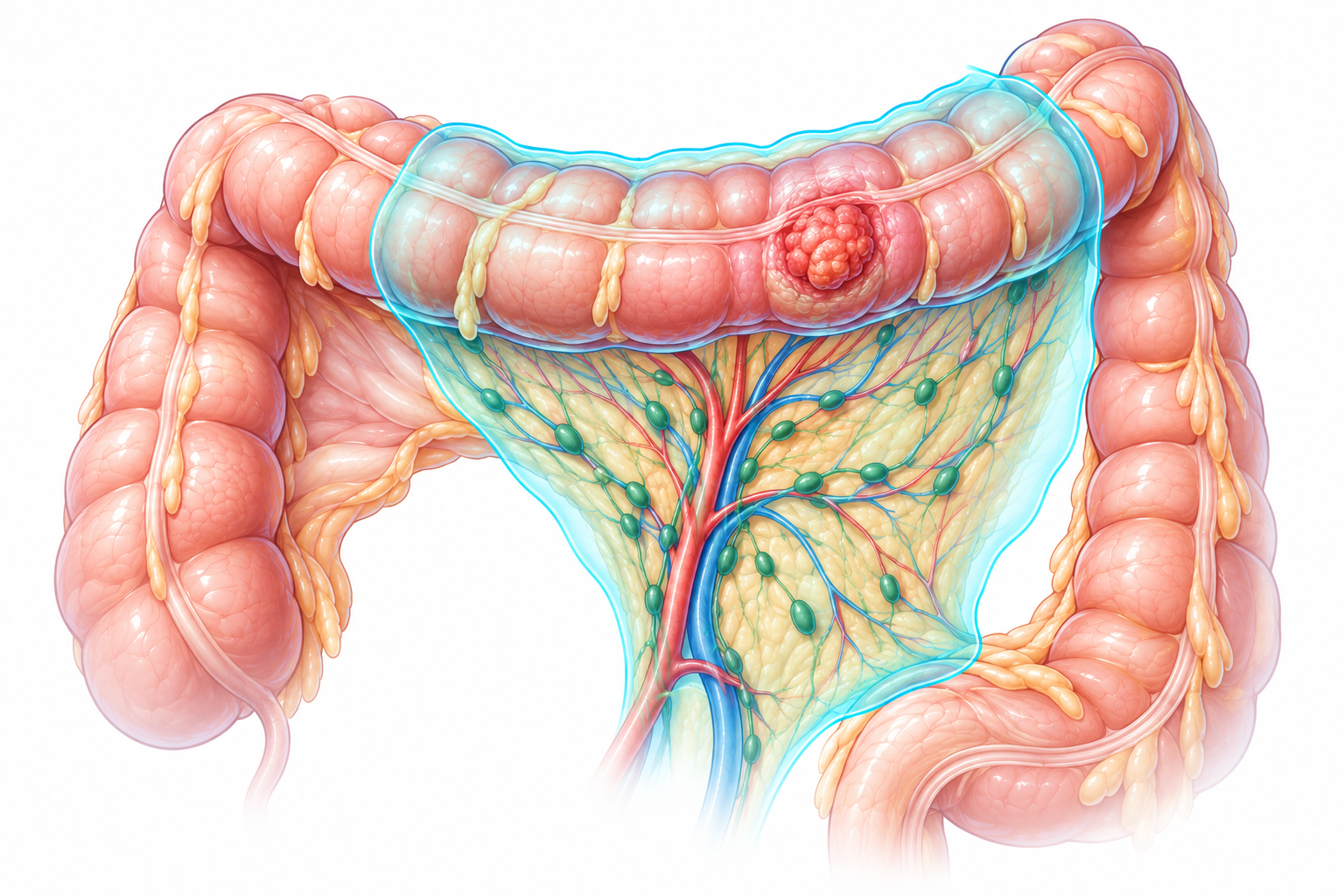
The operation aims to remove the segment of colon containing the tumor, with adequate margins, along with the lymphatic territory associated with that portion of the colon.
The type of colectomy therefore depends mainly on the location of the tumor. Depending on its position, it may involve :
- a right colectomy
- resection of part of the transverse colon
- a left colectomy
- a sigmoidectomy
The exact extent of the resection is tailored to the anatomy and the location of the tumor.
Right or left colectomy?
The operation depends on the location of the tumor
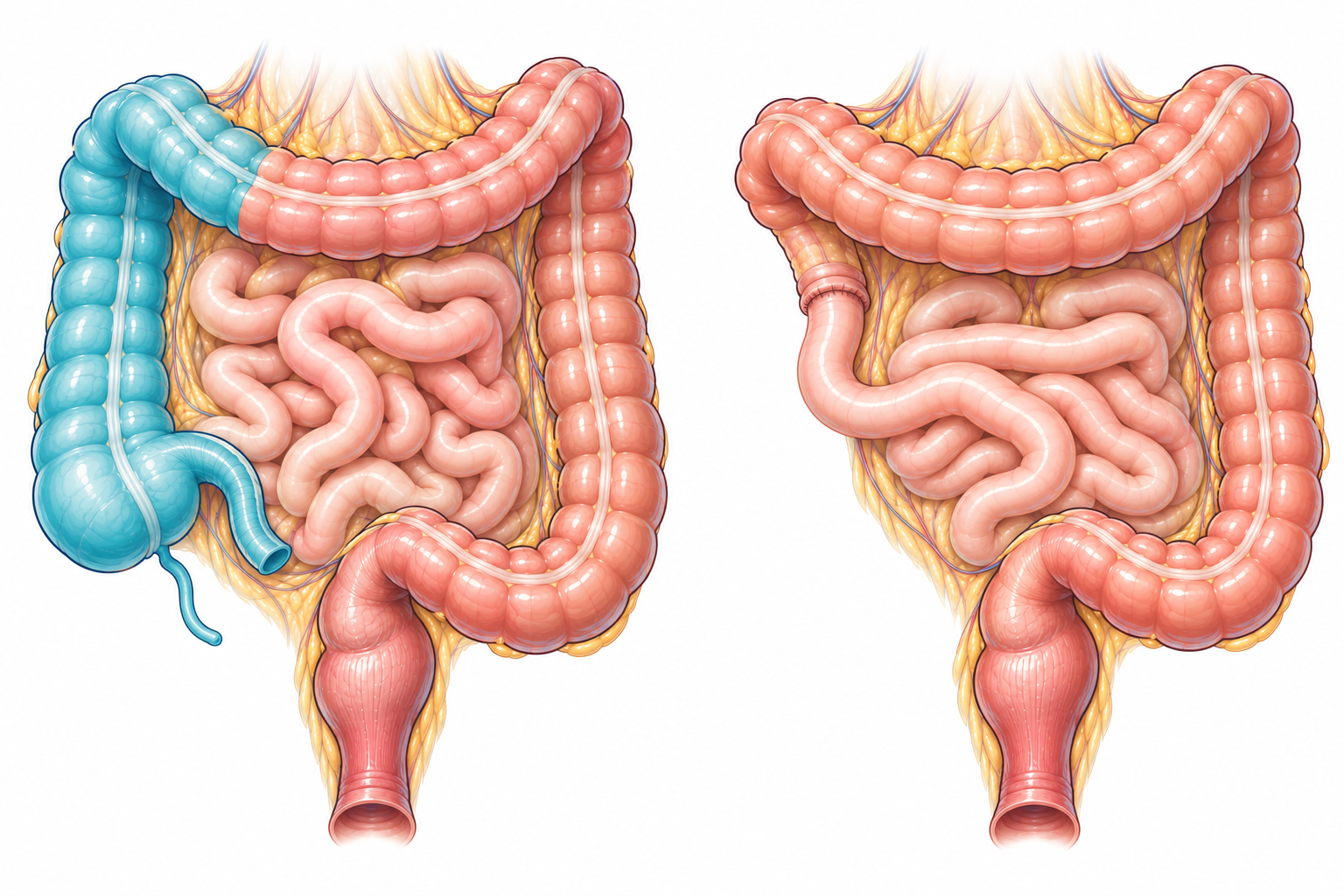
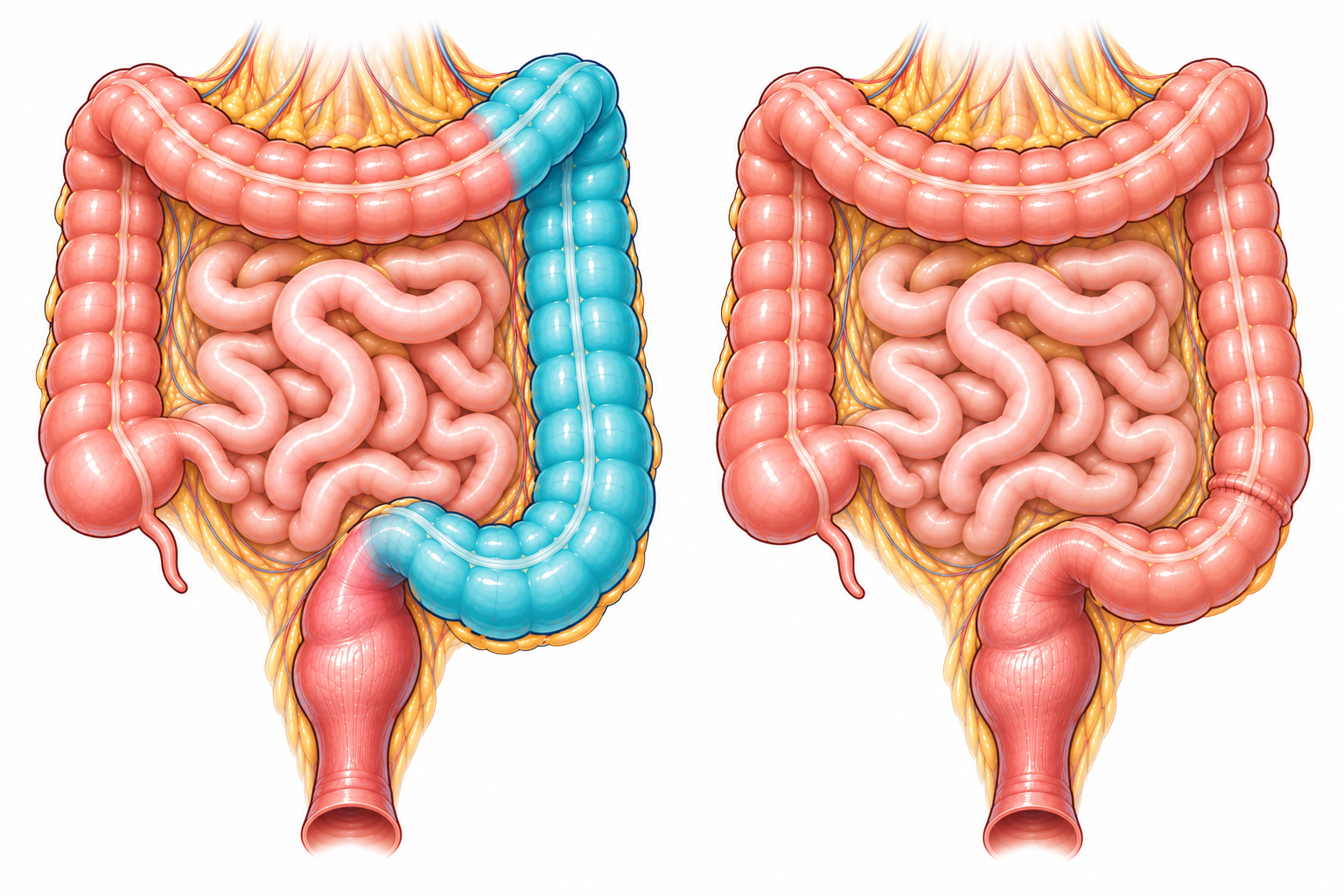
A tumor of the right colon and a tumor of the left colon do not lead to the removal of exactly the same part of the large intestine.
Tumor of the right colon
A right colectomy removes the affected segment along with its vascular and lymphatic territory. Digestive continuity is then generally restored between the small intestine and the remaining colon.
Tumor of the left colon
A left colectomy removes the affected segment of colon along with its lymphatic territory. Digestive continuity is then restored between the remaining digestive segments when conditions allow.
→ Learn more about colectomy
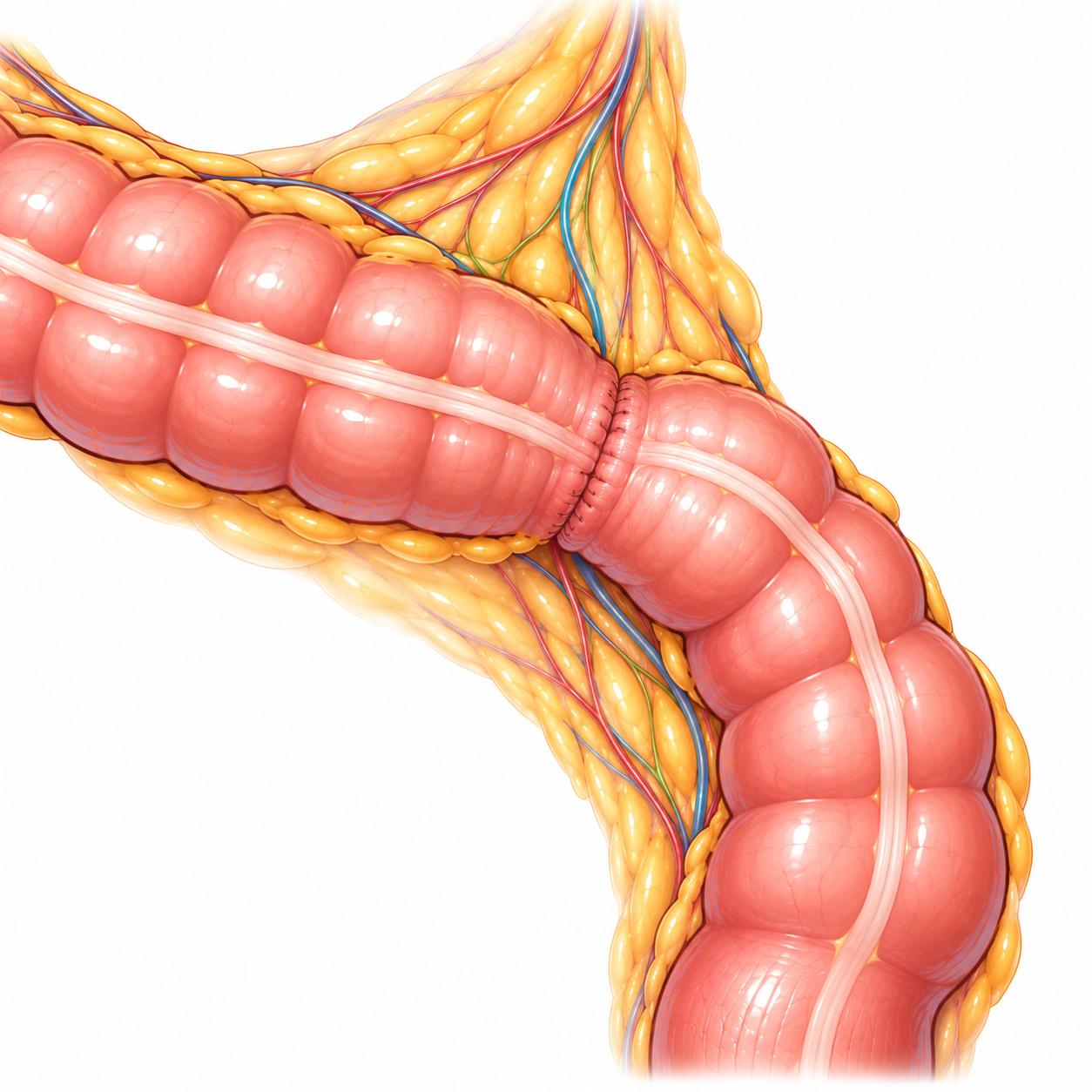
How is digestive continuity restored?
An anastomosis joins the remaining digestive segments
After removing the affected part of the colon, the two remaining digestive segments can generally be rejoined.
This junction is called an anastomosis.
The type of anastomosis depends on the part of the colon that was removed.
The goal is to achieve digestive continuity that is anatomically appropriate, well vascularized and free of excessive tension.
Laparoscopy or robot-assisted surgery
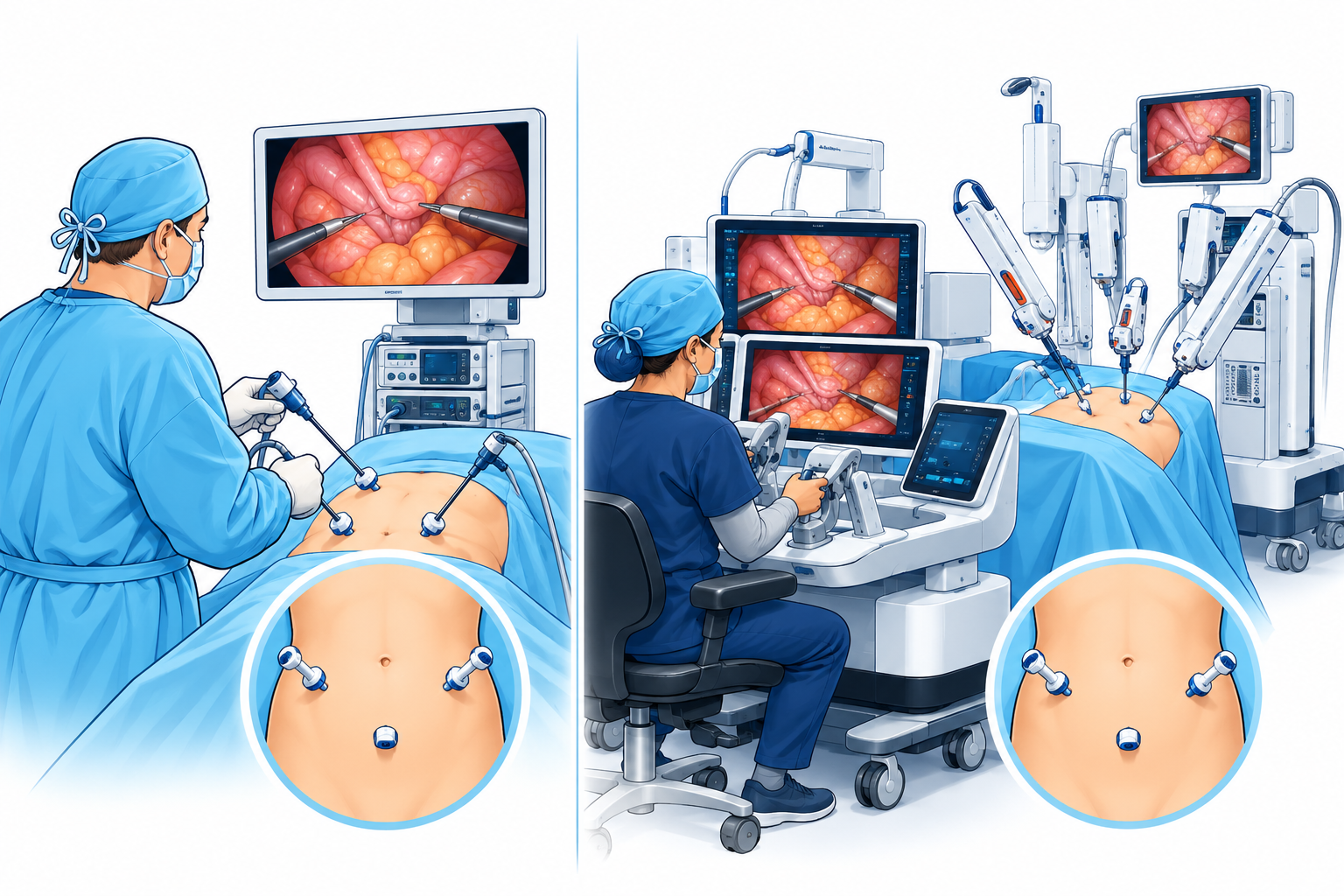
Two minimally invasive approaches
When the oncological and anatomical situation allows, a colectomy can be performed using a minimally invasive approach.
Laparoscopy
Laparoscopy uses a camera and instruments inserted through several small abdominal incisions.
Robot-Assisted Surgery
In certain situations, the operation can also be performed with robotic assistance. The surgeon personally controls the instruments from the console : the robotic system does not perform any movement autonomously.
In certain situations, a colectomy can be performed by laparoscopy or with robotic assistance controlled by the surgeon.
Are lymph nodes removed?
Their analysis is part of oncological surgery
Yes.
The lymph nodes located in the territory draining the affected part of the colon are removed along with the surgical specimen.
They are then examined by the pathologist.
This analysis helps determine whether tumor cells have reached the lymph nodes and contributes to establishing the final stage of the disease.
This information then helps determine whether additional treatment is needed.
Is chemotherapy always necessary?
No: it depends in particular on the stage
Chemotherapy is not systematic after every operation for colon cancer.
For certain early-stage tumors, surgery may be the only treatment needed.
When there is lymph node involvement, adjuvant treatment is generally indicated.
In certain tumors without lymph node involvement but with particular characteristics, the value of additional treatment may also be discussed.
The final analysis of the surgical specimen therefore plays an essential role in this decision.
Surgery is not an isolated step : it is part of an overall oncological strategy.
Why is the tumor analyzed?
The tumor provides information useful for choosing treatment
Pathological analysis is not limited to confirming the presence of cancer. It also helps study :
- the type of tumor
- its degree of invasion into the wall
- the resection margins
- the lymph nodes removed
- certain biological and molecular characteristics when indicated
Testing, particularly of the MMR/MSI system, is now part of the important information used in managing colorectal cancers.
Other molecular tests may be needed depending on the stage and clinical situation.
Is a stoma necessary?
Not systematically
A colectomy for colon cancer does not automatically mean a stoma will be created.
In many planned operations, digestive continuity can be restored directly.
A stoma may, however, be necessary in certain specific situations, depending in particular on :
- the location of the tumor
- the context of the operation
- any obstruction or perforation
- the patient’s general condition
- whether or not the conditions allow an anastomosis to be performed safely
Whether a stoma may be needed is assessed individually and discussed before surgery whenever the situation allows it to be anticipated.
What happens after the operation?
Analysis of the surgical specimen clarifies the treatment to follow
After surgery, the surgical specimen is analyzed in detail. The pathology report helps clarify, in particular :
- the nature of the tumor
- its extent within the wall
- the status of the margins
- the number and status of the lymph nodes examined
- the pathological stage
These results are then combined with the other information in the file to determine subsequent treatment and follow-up.
Depending on the situation, additional oncological care may be offered.
After a Colectomy
A gradual recovery
After surgery, mobilization is gradually encouraged.
Eating is resumed based on digestive recovery and the clinical situation.
The length of hospital stay depends on the type of operation and postoperative progress.
Bowel habits may be temporarily altered after a colon resection.
Return to walking, daily activities, work and sport is gradual and tailored to each patient.

What if the cancer has spread to other organs?
The strategy becomes multidisciplinary
Colon cancer can sometimes be discovered with distant spread.
The liver and lungs are among the organs that can be affected.
This does not mean there is a single treatment strategy.
Depending on the number, location and treatability of the different lesions, several treatments may be combined. These may include :
- drug treatments
- surgery in certain selected situations
- local treatments for certain metastases
- combined strategies carried out in an order tailored to the situation
These cases require multidisciplinary evaluation.
The discovery of metastases changes the treatment strategy, but on its own does not sum up a patient’s treatment options.
Multidisciplinary Care
Several specialists contribute to the treatment strategy
The management of colon cancer does not rely on a single physician. Depending on the situation, the case draws on the expertise of :
- gastroenterologists
- surgeons
- oncologists
- radiologists
- pathologists
- other specialists when necessary
The test results help define a strategy tailored to the stage and characteristics of the disease.
Personalized Surgical Care
Understanding the Proposed Intervention
The location of a colon cancer largely determines the type of resection needed.
The surgical consultation helps explain, in particular :
- which part of the colon needs to be removed
- how digestive continuity will be restored
- which surgical approach may be considered
- the expected benefits and risks of the operation
- the different stages of recovery
Dr Pierre Fournier
General and Visceral Surgery
[Real photo of Dr Fournier — to be added once available]
Frequently Asked Questions
No. A polyp is a lesion of the colon lining. However, certain types of polyps can gradually progress and are considered precancerous lesions.
No. Some cancers can be discovered during screening before any symptoms appear.
Colonoscopy allows the lesion to be visualized and biopsied. Microscopic analysis of the samples confirms the diagnosis.
The CT scan helps assess the spread of the disease beyond the colon and contributes to choosing the treatment strategy.
No. CEA alone cannot diagnose or rule out colon cancer. It can be used as additional information and in follow-up.
Surgery is the main treatment for many localized, operable colon cancers. The strategy differs for certain very early or advanced diseases.
Usually not. The extent of the resection depends on the location of the tumor and its vascular and lymphatic territory.
A right colectomy removes a portion on the right side of the colon, while a left colectomy involves a portion on the left side. The exact resection depends on the tumor’s location.
Regional lymph nodes can contain tumor cells. Their analysis helps precisely determine the stage and whether additional treatment may be needed.
No. A stoma is not systematic after surgery for colon cancer.
No. It depends in particular on the final stage and the characteristics of the tumor.
Yes, many colon cancers can be operated on by laparoscopy when the situation is suitable.
In certain situations, a colectomy can be performed with robotic assistance. The system remains entirely controlled by the surgeon.
No. Although both belong to the colorectal cancer family, their work-up and treatment strategy differ in important ways.
Has a Colon Cancer Just Been Diagnosed?
The surgical consultation allows a review of the tumor’s location, the staging work-up and the proposed treatment strategy. The goal is to gain a precise understanding of the planned operation and its place in the overall treatment.